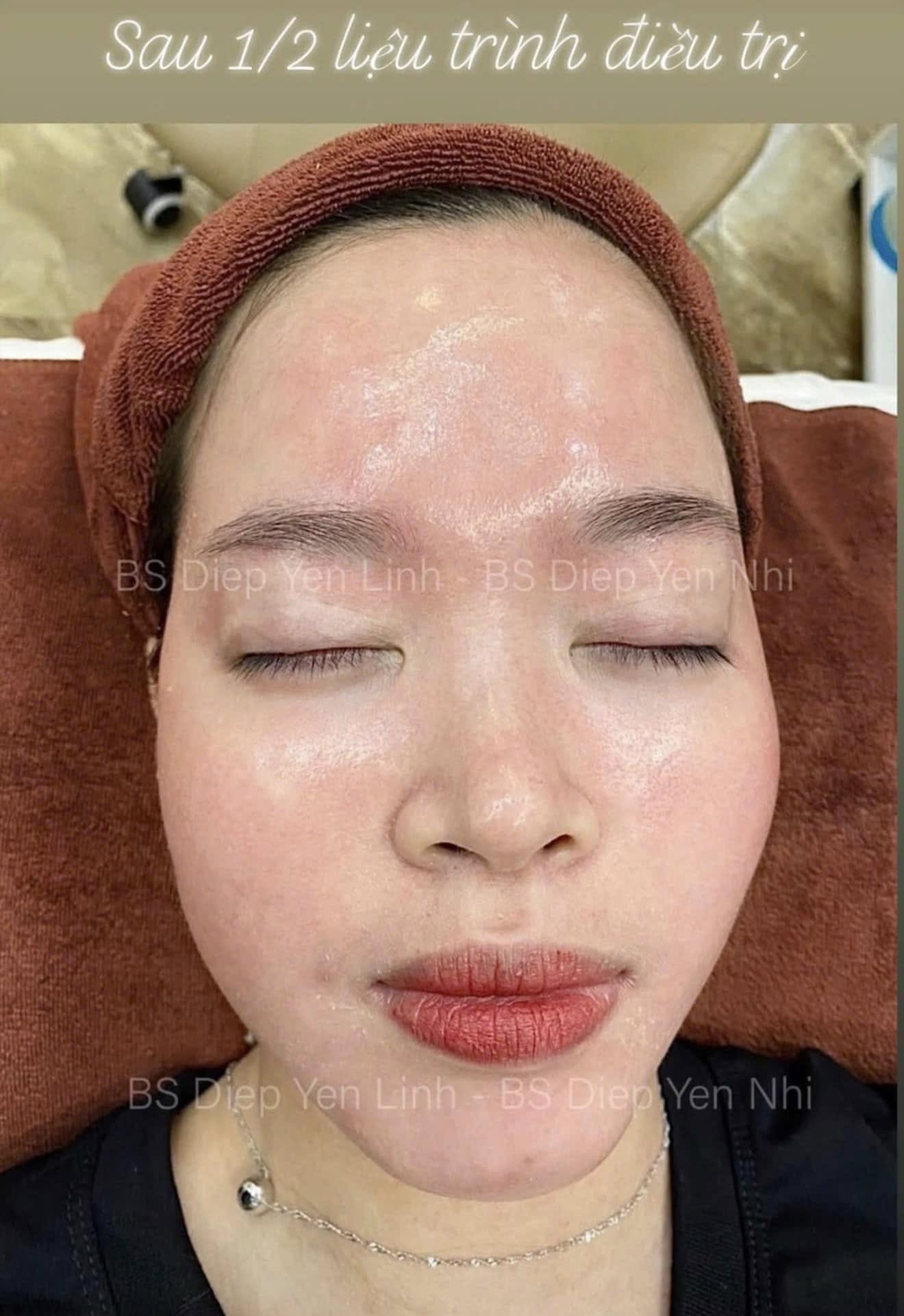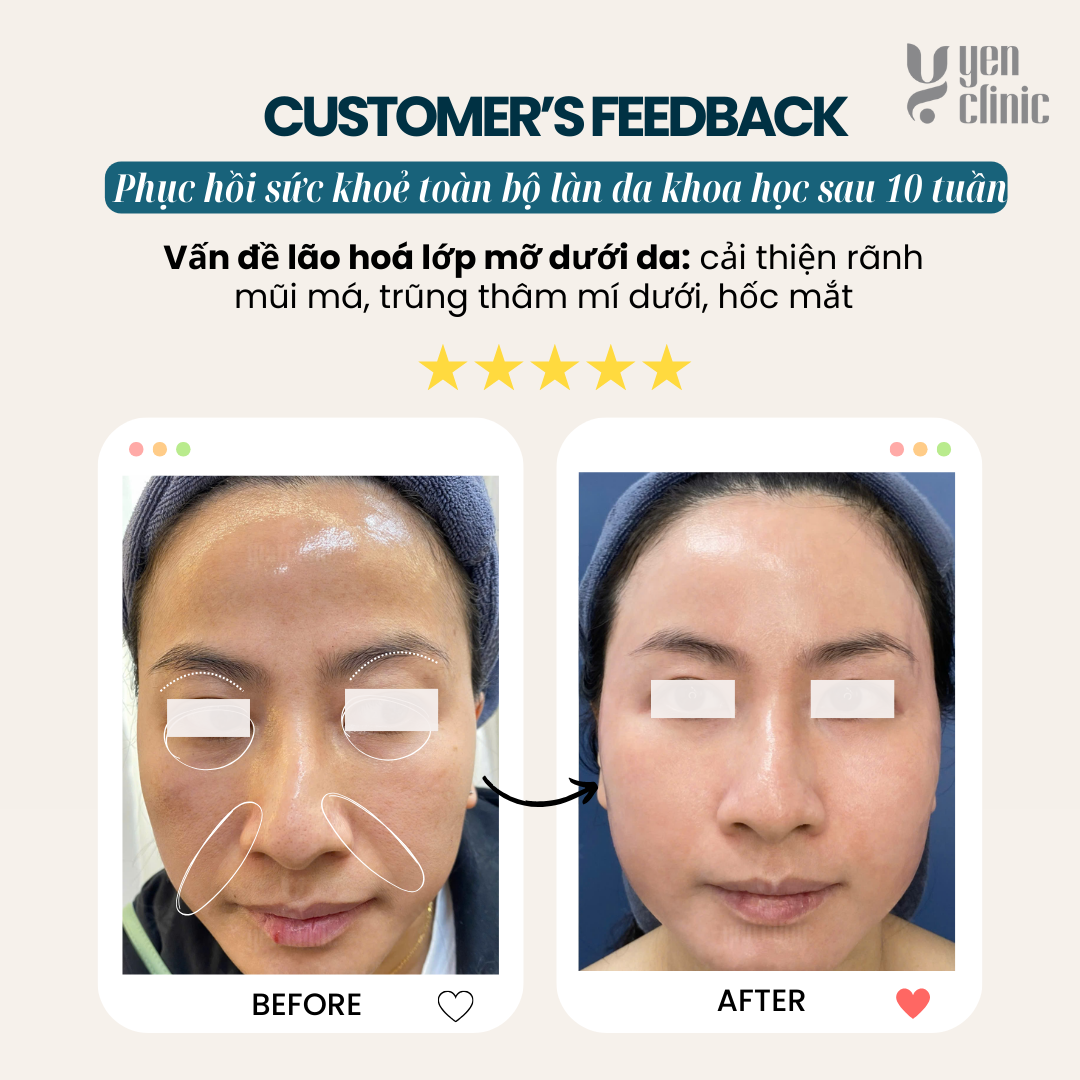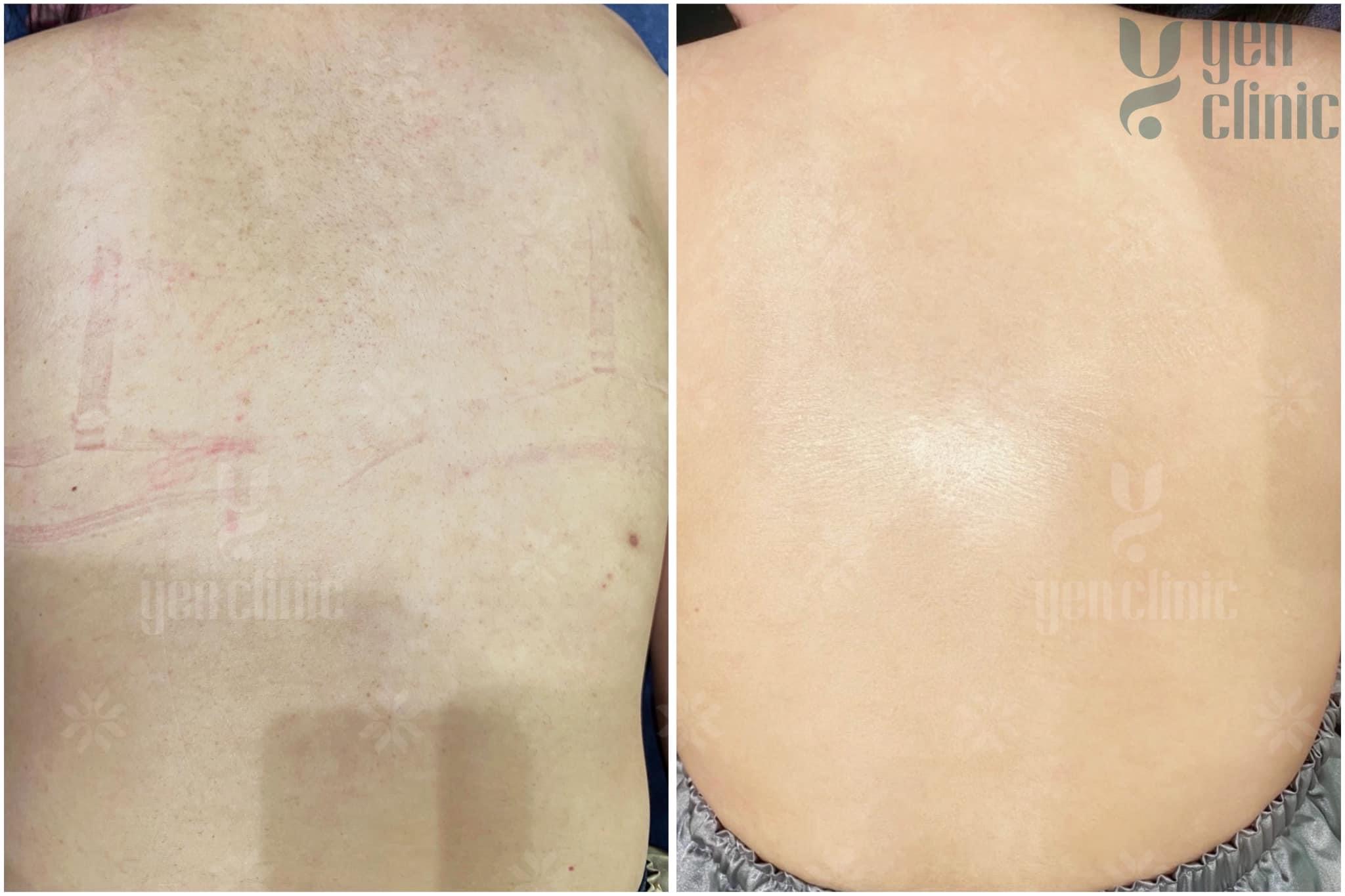
A chemical peel is a treatment in which an acid solution is applied to the skin for a controlled time, so the outer layer peels away and smoother, more even skin grows back. Peels come in three depths: a superficial peel flakes for a few days, while a deep peel needs two to three weeks of recovery. Darker and Asian skin types usually start with a superficial peel.
Key points
- A chemical peel deliberately injures the outer skin with an acid so it renews itself. The deeper the peel, the stronger the result, but the longer the healing and the higher the risk.
- Superficial peels stay in the epidermis and flake for 1–7 days. Medium peels reach the papillary dermis and peel in 7–14 days. Deep peels reach the reticular dermis and need 2–3 weeks at home.
- Peels help acne, dark marks, melasma, dullness and very shallow scars. Deep acne scars need laser or subcision instead.
- Asian and darker skin is prone to post-inflammatory hyperpigmentation (dark marks after irritation), so skin preparation and the right depth matter.
- Over-the-counter “peels” are mild exfoliants. Medical peels should be chosen and monitored by a dermatologist.
What is a chemical peel?
A chemical peel is a procedure in which a dermatologist applies an acid solution to the skin for a set amount of time. The acid injures the outermost layer on purpose. Over the next days that layer peels off, and the new skin underneath is smoother and more even in tone. The American Academy of Dermatology (AAD) notes that dermatologists use peels to treat some types of acne and conditions that discolour the skin, such as melasma and uneven skin tone.
Unlike a daily exfoliating product, a medical peel uses a higher concentration, goes deeper and is timed precisely on the skin. That is why it works better, and also why it can burn, darken or scar the skin if it is done badly.
The three types of chemical peel
Skin has three main layers: the epidermis (the outer layer), the dermis (the layer below, which holds collagen) and the subcutaneous fat. The dermis is divided into the papillary dermis on top and the reticular dermis below. Peels are named by how deep the solution reaches.

| Depth | Reaches | Common agents | Used for | Healing |
|---|---|---|---|---|
| Superficial | Epidermis | Glycolic acid (AHA), salicylic acid (BHA), Jessner’s solution, low-strength TCA | Acne, dark marks, dullness, uneven tone | Redness and light flaking for 1–7 days |
| Medium | Papillary dermis | TCA around 35%, sometimes with Jessner’s or 70% glycolic | Melasma, brown spots, shallow acne scars, fine lines | Swelling and crusts; peels in 7–14 days |
| Deep | Reticular dermis | Phenol | Severe sun damage, deep wrinkles, scars | 2–3 weeks at home; redness for months |
A common mistake online: even the deepest peel stops in the dermis and does not reach the fat layer. Phenol, the agent used for deep peels, can be absorbed into the blood and affect the heart rhythm, so it is only done in a medical setting with monitoring.
What can a chemical peel treat?
Peels suit problems that sit in the upper layers of the skin:
- Blackheads and mild to moderate acne. Salicylic acid (BHA) is oil-soluble, gets into pores and reduces both blackheads and inflamed spots.
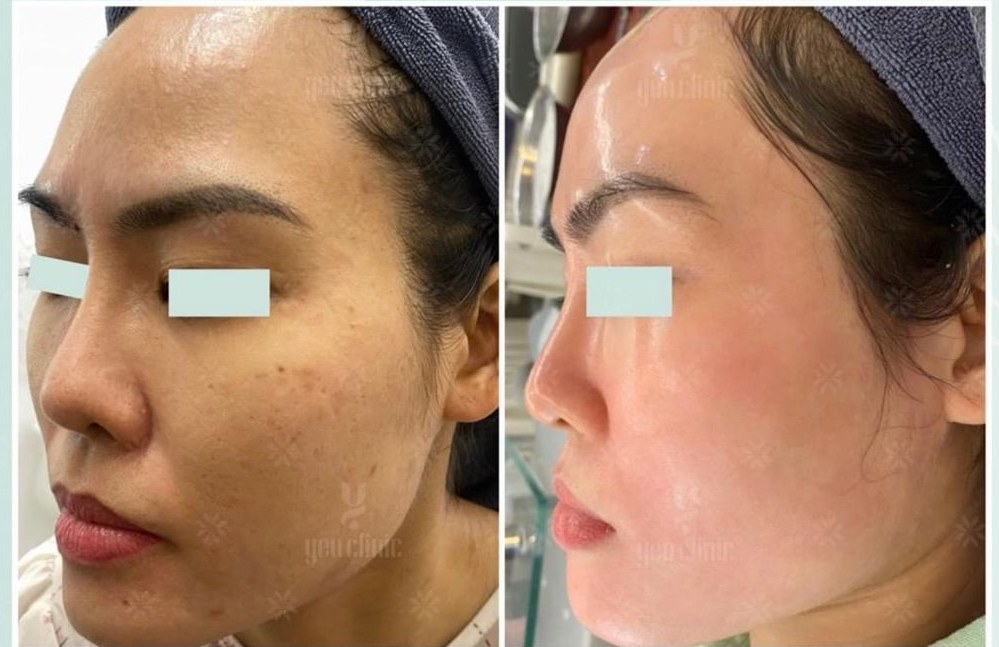
- Dark marks after acne, dull or uneven skin. The pigmented outer layer peels away and the new skin is more even.
- Melasma. Superficial and medium peels support prescription creams. A peel does not replace creams or sun protection.
- Very shallow acne scars and rough texture. A medium peel can smooth the surface.
- Mild sun damage and fine lines.
There are limits too. The American Society of Plastic Surgeons (ASPS) notes that a chemical peel cannot significantly tighten loose or sagging skin and cannot remove deep scars.
For example, someone with blackheads and a few inflamed spots on the forehead and chin is usually given a topical treatment and then a few salicylic peels, several weeks apart. Someone with deep, pitted acne scars needs fractional CO2 laser or subcision; a peel alone will not fill those scars.
What are the side effects of a chemical peel?
Peels are fairly safe when the depth matches the skin, but they are not risk-free. The risk rises with depth.
- Expected: redness, stinging, tightness and peeling.
- Post-inflammatory hyperpigmentation: dark marks after the peel, more common in darker skin, including most Asian skin.
- Hypopigmentation: patches lighter than the surrounding skin. This, along with scarring and keloids, mainly occurs with deep phenol peels.
- Infection and cold sore flare-ups (herpes): if you get cold sores, tell your doctor so you can take preventive medication.
- Scarring: rare, but possible when a peel goes too deep, when peeling skin is picked or when the skin becomes infected.
Chemical peels on Asian and darker skin
Asian skin is among the skin types most prone to dark marks after a peel. DermNet also notes that Fitzpatrick skin types IV–VI carry a higher risk of pigment changes and scarring, so peels must be done carefully. A dermatologist usually:
- Starts with superficial peels and avoids deep peels unless they are really needed.
- Prepares the skin for 2–4 weeks with prescription creams such as hydroquinone or a retinoid, to even out the skin and reduce the risk of dark marks.
- Sets the strength and contact time for you, then checks how your skin reacted before deciding on the next session.
Sun protection before and after a peel matters just as much. Freshly peeled skin tans and darkens very easily, and in a tropical city like Ho Chi Minh City the sun is strong all year.
Who should not have a chemical peel?
Tell your doctor first, or postpone the peel, if you:
- Are taking or have recently taken isotretinoin (Roaccutane, Accutane): medium and deep peels are usually avoided for at least 6–12 months after stopping.
- Are pregnant: no medium or deep peels. If you are breastfeeding, ask your doctor.
- Get cold sores (herpes): you will need preventive medication.
- Form keloids or raised scars easily.
- Have inflamed, irritated or infected skin, or have recently had laser or surgery on the face.
- Have heart, liver or kidney disease: no deep phenol peels.
What your skin looks like day by day

- Superficial peel: redness and light flaking for about 1–7 days. Most people carry on working.
- Medium peel: redness, mild swelling and darkening, then crusting and peeling over 7–14 days. Many people take a few days off.
- Deep peel: about 2–3 weeks of recovery at home. Redness can last for months, and strict sun avoidance is needed for 3–6 months.
While the skin is peeling, do not pick it (picking delays healing and causes scars), moisturise with what your doctor recommends, use broad-spectrum sunscreen every day and pause retinoids until your doctor says you can restart. Contact your doctor straight away if burning gets worse, swelling increases, the skin oozes, or blisters like cold sores appear.
How often can you have a chemical peel?
According to the AAD, superficial peels usually take 3–5 sessions, 2–5 weeks apart, to give the result you want. A medium peel is usually repeated only after 3–6 months, and a deep peel is usually a one-off. Your doctor sets the exact interval based on the peel and how your skin responds.
Planning a peel around a trip to Vietnam
A superficial peel fits easily into a short stay. For a medium or deep peel, plan time for the skin to heal before beach days and flights. The US CDC Yellow Book, citing the American Society of Plastic Surgeons, recommends waiting 7–10 days after facial laser or cosmetic procedures before flying. Book the peel early in your visit, avoid swimming pools and the sea while your skin is peeling, and bring a wide-brimmed hat.
At-home peels or a peel at the clinic?
Over-the-counter “peels” usually contain low concentrations of AHAs or BHAs. The US Food and Drug Administration (FDA) advises that cosmetic AHA products should contain no more than 10% AHA with a pH of 3.5 or higher, and that people should use sun protection while using them and for a week afterwards. These products give mild exfoliation and can smooth the skin if used correctly, but they are not a medical peel.
The AAD cites an FDA warning that some chemical peels sold for at-home use are causing serious injuries, and advises buying and using a peel only under the supervision of a licensed, trained provider. In 2024 the FDA warned that some peel products sold online are too strong to use safely at home, can cause severe chemical burns, and that it has not approved any chemical peel products. The AAD also stresses that results depend largely on the skill of the person doing the peel.
If you want to use a product at home, ask your dermatologist first, especially if you already use acne treatments such as retinoids or benzoyl peroxide, because irritation can build up.
Chemical peel, laser or microneedling?
| Skin concern | Usually first |
|---|---|
| Blackheads, mild acne | Topical treatment plus salicylic peels. See acne treatment |
| Melasma, dull skin | Prescription creams and sunscreen; superficial peels or low-energy laser as support. See melasma treatment |
| Freckles, sharply defined brown spots | Pigment laser. See laser freckle removal |
| Acne scars | Subcision, fractional CO2 laser, TCA CROSS; peels help only very shallow scars. See acne scar treatment |
Common myths about chemical peels
- “Deep peels reach the fat layer.” False. The deepest peels stop in the reticular dermis.
- “Peels don’t hurt and need no downtime.” True only for superficial peels. Medium and deep peels sting, swell and need time off.
- “Peel acids are natural, so they’re gentle.” TCA and phenol are strong chemicals. How safe a peel is depends on the strength, the contact time and who applies it.
- “The stronger the peel, the better.” A peel that is too deep for your skin raises the risk of dark marks and scars, especially on Asian skin.
How much does a chemical peel cost in Vietnam?
Prices vary with the type of peel, its depth and where you have it. The public Ho Chi Minh City Hospital of Dermato-Venereology lists 20–35% glycolic peels at VND 1,500,000 (about US$58) and 70% glycolic peels at VND 1,700,000 (about US$65) per session (public price list, checked 24 November 2026). At Yen Clinic, chemical peels start at VND 5,000,000 (about US$192) per session; a dermatologist examines you, chooses the peel, prepares skin that marks easily and follows you up. See the price list on our chemical peel in Ho Chi Minh City page. US dollar figures use the Vietcombank selling rate of VND 25,990 per US$1 on 23 November 2026, rounded.
Frequently asked questions
Is a chemical peel good for your skin?
Yes, for the right problem and at the right depth. Peels make skin smoother and more even and help with acne, dark marks and melasma. For superficial peels, the AAD says you may need 3–5 peels to get the result you want; DermNet notes the first peel can be disappointing. Most results are not permanent because the skin keeps ageing. Peels do not fill deep acne scars and do not replace sunscreen.
How long does a chemical peel last?
The AAD says most results are not permanent because the skin continues to age, and follow-up peels can help maintain results. Daily sun protection also helps, because sun exposure brings back dark marks and damage.
Is a chemical peel painful?
A superficial peel usually stings or feels warm for a few minutes. A medium peel burns more and can swell for a few days. A deep peel needs pain relief, anaesthesia and close monitoring.
What does your face look like 3 days after a chemical peel?
After a superficial peel, the skin may look slightly pink and flaky, or almost normal. After a medium peel, the AAD says the skin is red and swollen and the swelling worsens for the first 48 hours, so by day 3 you are usually past the worst swelling but still red, darker and tight, with crusts forming before they come off.
Can a chemical peel cause breakouts?
It can. DermNet notes that blackheads or acne may result from the peel itself. A review cites a study in Asian patients in which acne flares after the first treatment diminished with later treatments. If many inflamed spots appear or they last, tell your doctor rather than squeezing them.
Can I have a peel on sensitive skin?
Usually yes, but your doctor will choose a milder peel at a lower strength and may prepare your skin first. If your skin is red, burning or flaking, let it recover before any peel.
Can you have a chemical peel on your body?
Yes. The AAD says peels can treat the hands, neck and chest as well as the face. For acne, the same peeling agents used on the face can generally be used on the back. The chest and neck scar more easily, so they are treated with extra caution or avoided.
Sources: AAD: Chemical peels overview, FAQs, preparation (aad.org/public/cosmetic/younger-looking/chemical-peels-overview). DermNet: Chemical peels (dermnetnz.org/topics/chemical-peels). Rendon MI et al. Evidence and considerations in the application of chemical peels in skin disorders and aesthetic resurfacing, J Clin Aesthet Dermatol 2010 (PMC2921757). Castillo DE, Keri JE. Chemical peels in the treatment of acne, Clin Cosmet Investig Dermatol 2018 (PMC6053170). FDA: Alpha Hydroxy Acids (fda.gov/cosmetics/cosmetic-ingredients/alpha-hydroxy-acids); FDA warns against purchasing or using chemical peel skin products without professional supervision (July 2024). ASPS: Chemical peel (plasticsurgery.org/cosmetic-procedures/chemical-peel). CDC Yellow Book: Medical tourism (cdc.gov/yellow-book/hcp/health-care-abroad/medical-tourism.html). Ho Chi Minh City Hospital of Dermato-Venereology: service price list (bvdl.org.vn/cong-dong/bang-gia-dich-vu).