Treatment for melasma, freckles and pigmentation
A treatment plan combining laser, injections and prescription creams, overseen by a dermatologist from start to finish.
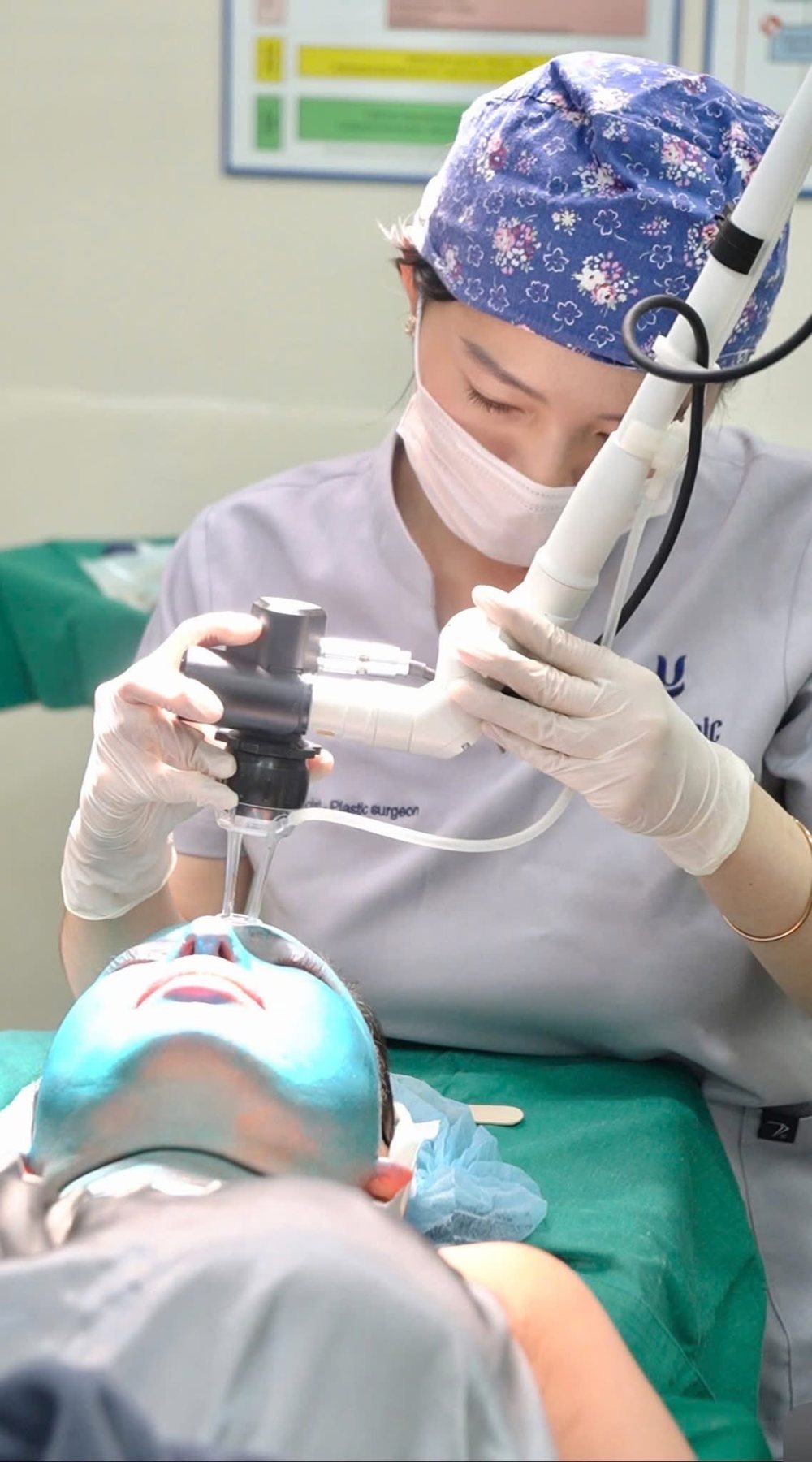
- Doctors
- Dr Diep Yen Linh, Dr Diep Yen Nhi
- Combines
- Laser, injections, prescription creams
- PRP course
- Every 4 to 6 weeks, over 3 to 6 months

Doctors who examine, treat and follow up every case
Melasma is a chronic condition. That is why a treatment plan at Yen covers both fading it and keeping it from darkening again.
- Dr Diep Yen Linh, MSc, Specialist Level I
- MSc in Dermatology, University of Medicine and Pharmacy at Ho Chi Minh City.
- Dr Diep Yen Nhi, MSc, Specialist Level I
- MSc in Dermatology; Dermatologic Surgery Fellow at Yonsei University, Severance Hospital; International Fellow, ASDS.
- Specialist doctors
- Doctors with a master’s degree or Specialist Level I qualification in dermatology and plastic surgery.
Before and after treatment
Photos shared with the patients’ consent and published on the clinic’s pages. Results vary from person to person.
-
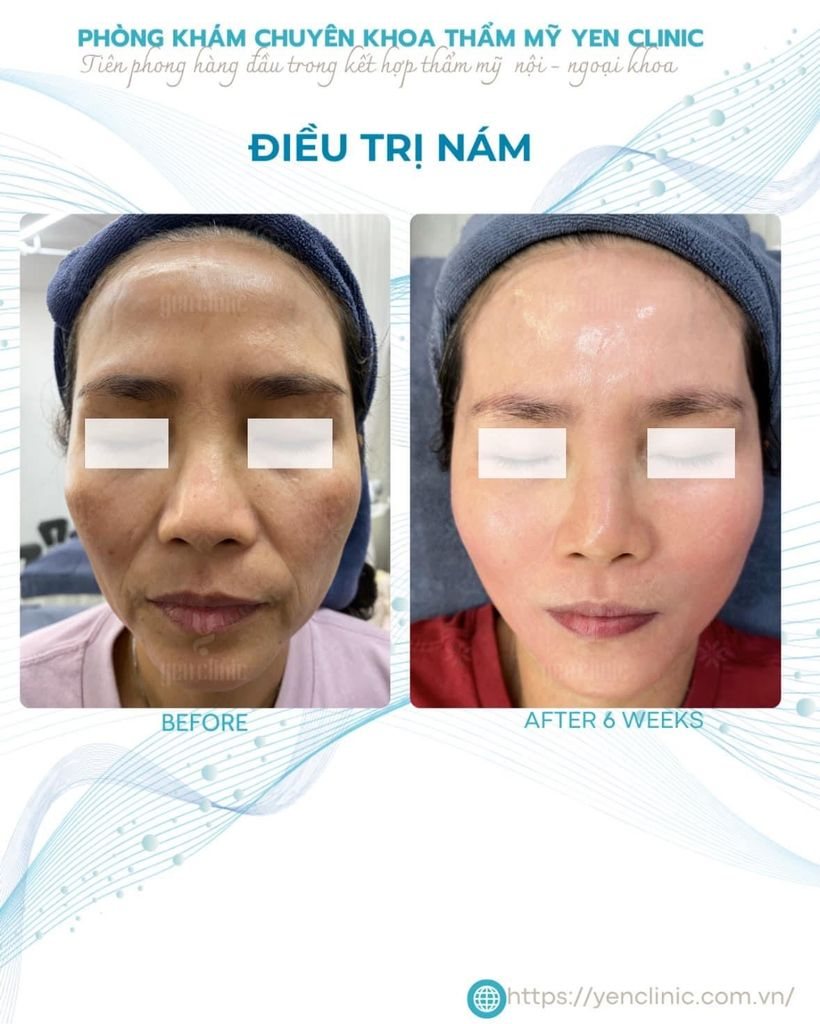
Melasma in a patient over 50
After 6 weeks. Read the case
-
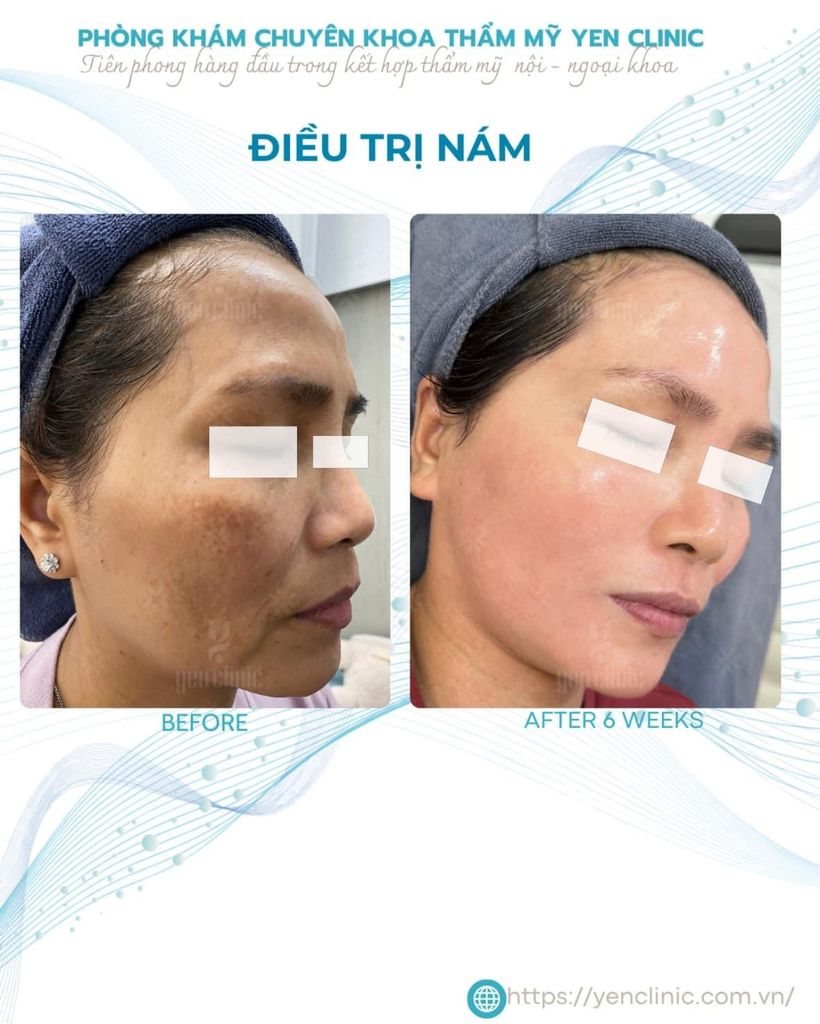
Same case, side view
After 6 weeks. Read the case
-
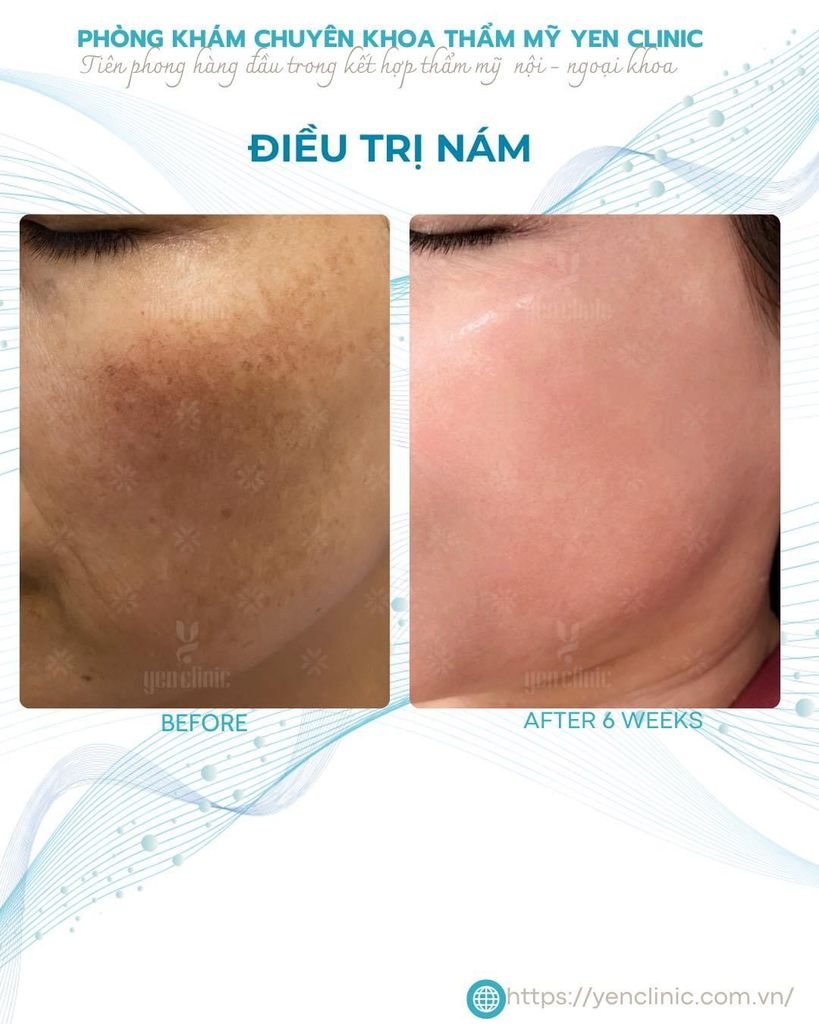
Close-up of the melasma
After 6 weeks. Read the case
What melasma is and why it often comes back
Melasma appears as blotchy brown or grey-brown patches, usually symmetrical on both cheeks, the forehead, the bridge of the nose and the upper lip. It is common in women, usually starts between the ages of 20 and 40, and is frequent in medium skin tones such as Vietnamese skin.
Melasma is not harmful to your health, but it is a chronic condition that comes back easily. Triggers include sunlight (both UV and visible light), hormonal changes during pregnancy or from the contraceptive pill, family history, and some medications that make the skin sensitive to the sun. In a study cited by the American Academy of Dermatology (AAD), nearly half of people with melasma had a relative who also had it.
So melasma is not treated in one go. The aim is to fade the patches, then keep them from darkening again with sun protection and maintenance creams.
You are more likely to get melasma if you
- Spend a lot of time in the sun without careful sun protection
- Are pregnant or taking the contraceptive pill
- Have relatives with melasma
- Take medication that makes your skin sensitive to the sun
- Have a medium skin tone, like most Vietnamese people
Melasma, freckles or dark marks
Each kind of brown mark has its own cause, so the doctor examines your skin closely before choosing an approach.
Melasma
Brown or grey patches on the face; comes back easily.
Freckles and brown spots
Small, well-defined brown dots.
Dark marks after acne or inflammation
Marks left behind after acne or skin injury.
Dull, uneven skin tone
Skin looks dull and has lost its radiance.
Why melasma needs combined treatment
-
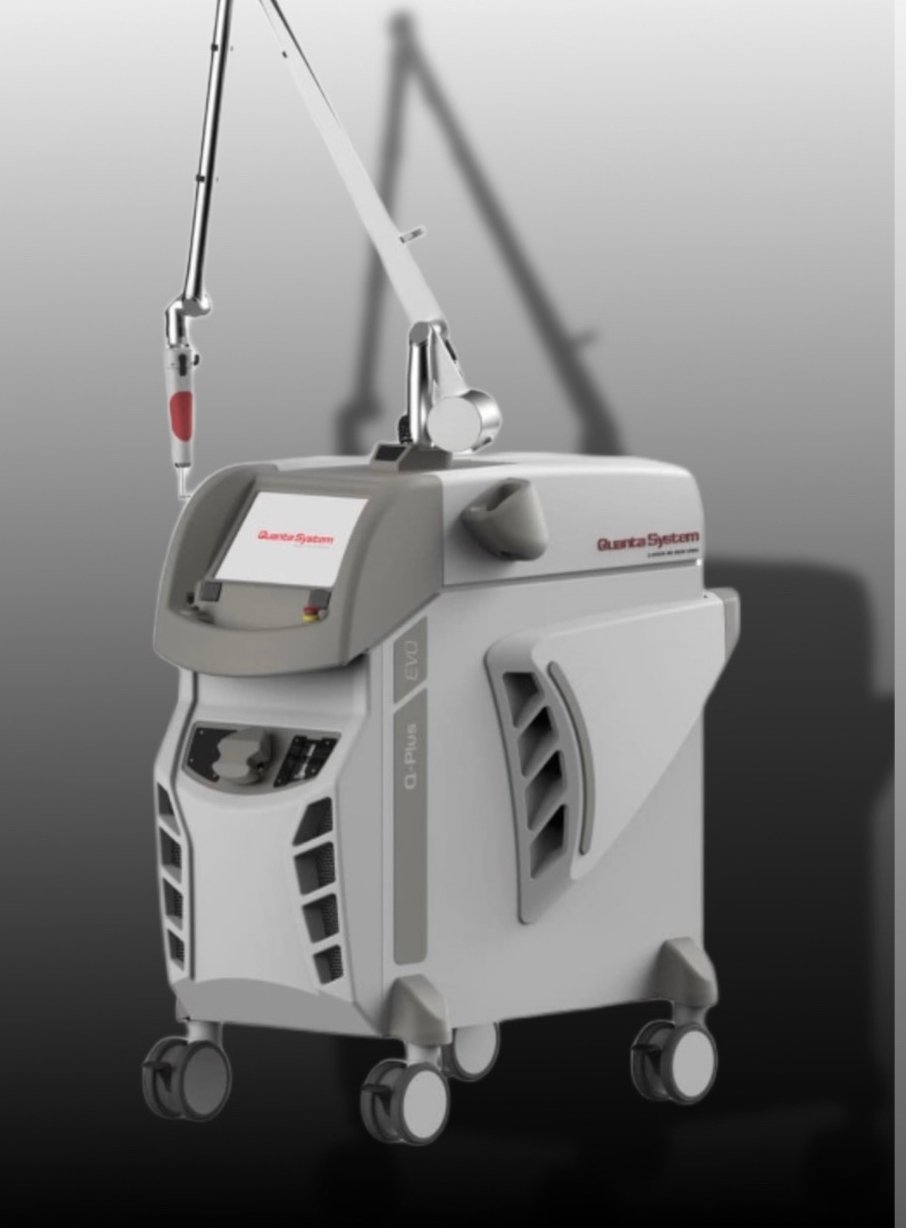
01 · Laser
Laser 1064nm Nd:YAG, 532nm, Ruby
Targets the pigment, with the wavelength chosen for the type of melasma and how sensitive your skin is.
-
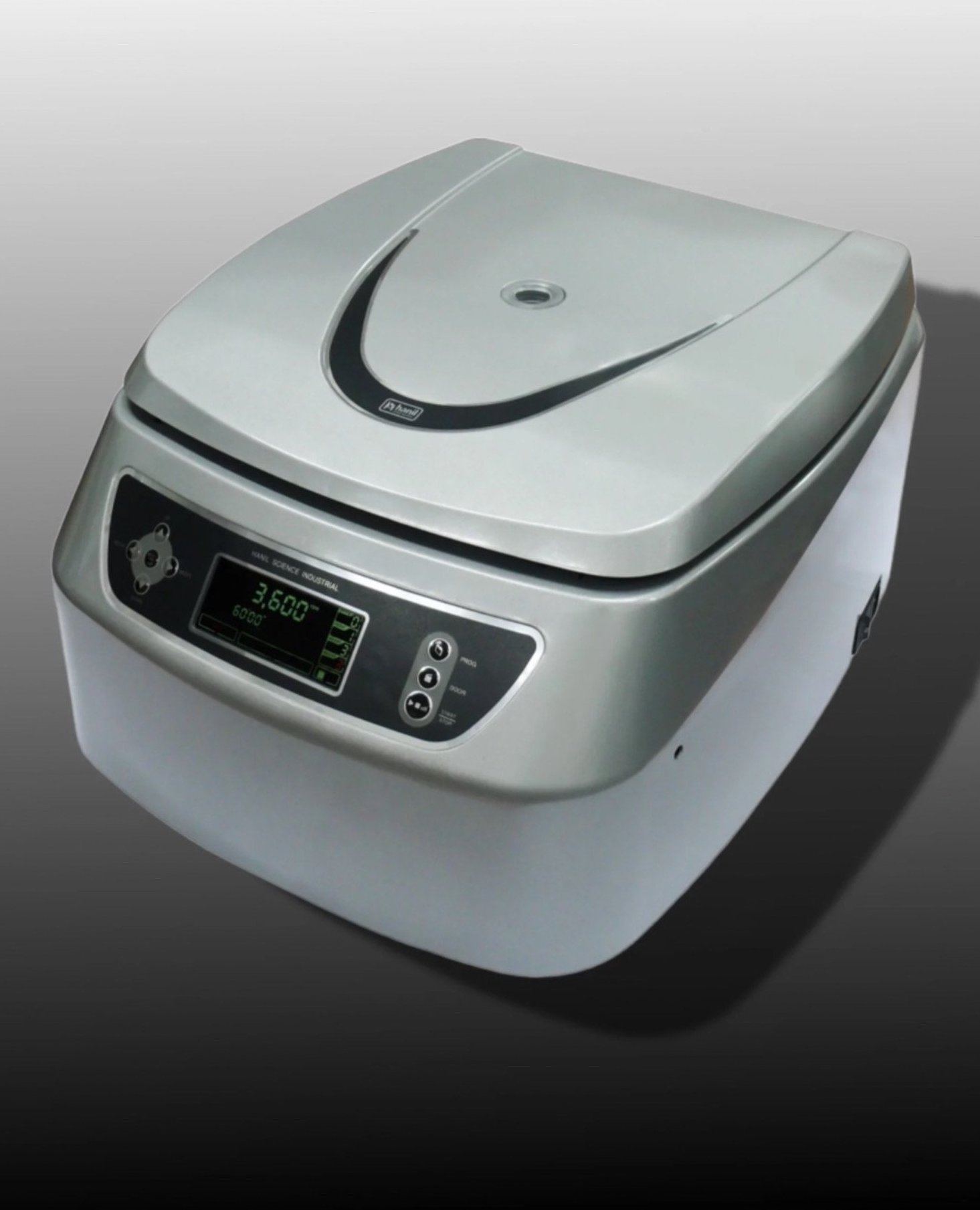
02 · Injections
PRP, meso Redensity I, Exosome, PDRN
Stimulates renewal, reduces inflammation and improves skin radiance and elasticity.
-
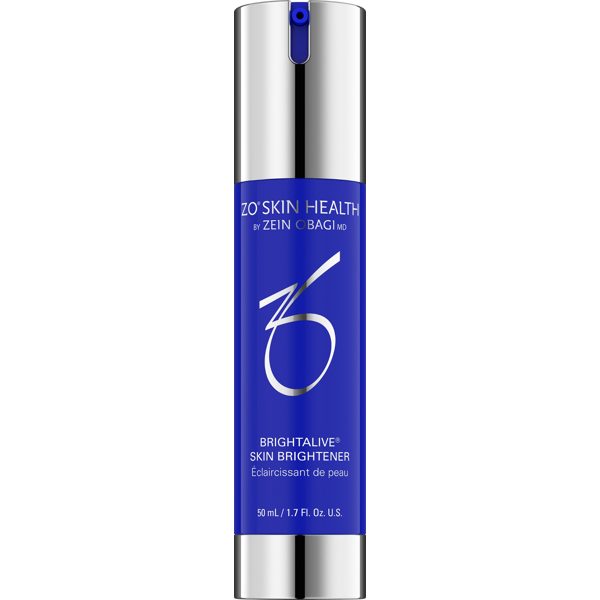
03 · At home
Creams for pigmentation disorders
ZO Skin Health products, prescribed and closely monitored by the doctor.
- Follow-ups, sun protection
- The treatment plan is adjusted to how you respond, with maintenance to limit recurrence.
A course of melasma treatment at Yen
Examination and pigment type
The doctor tells melasma, freckles and dark marks apart, and gives you a quote.
Preparing the skin
Settling the skin with prescription creams before any procedure.
Laser and injections
On a schedule, for example PRP every 4 to 6 weeks.
Maintenance
Creams, sun protection and maintenance sessions.
Melasma treatment costs
Melasma treatment from price to be updated
The doctor gives you a quote after the first consultation.
Type of pigmentation
Freckles usually need fewer sessions than melasma, especially deep melasma.
Area and depth
A small patch on the cheekbone is different from melasma spreading across both cheeks and the forehead.
Combination of treatments
Some cases need only creams and laser; others add PRP, mesotherapy or exosomes.
Treatment time
PRP usually runs for 3 to 6 months, followed by maintenance sessions.
Creams, laser and recurrence
Types of melasma, creams and tablets, laser risks, and whether melasma goes away for good.
Is my melasma superficial, deep or mixed?
| Type of melasma | Signs | Under the lamp | Response to treatment |
|---|---|---|---|
| Superficial (epidermal) | Dark brown, well-defined edges | Darker and more visible | Usually responds well |
| Deep (dermal) | Light brown to blue-grey, blurred edges | No more visible | Difficult; needs persistence |
| Mixed | Features of both; the most common type | Darker in places | Partial improvement |
The doctor examines your skin with a Wood’s lamp or a dermatoscope to see whether the pigment is superficial or deep, and chooses the approach from there. Yen to confirm whether it uses a Wood’s lamp or a skin imaging device
Who prescribes melasma creams and medication?
Topical creams are the foundation of every melasma treatment plan, even when laser or injections are used. Ingredients with evidence behind them include:
- Hydroquinone: blocks pigment production; prescription only. A combination of hydroquinone, tretinoin and a mild corticosteroid improves or clears melasma in 60–80% of users.
- Tretinoin (a retinoid): speeds up cell turnover; usually combined with other ingredients.
- Azelaic acid, kojic acid, vitamin C: gentler, suited to sensitive skin or the maintenance phase.
These ingredients must be used at the right strength and for the right length of time. Self-bought mixed creams or creams of unknown composition can thin the skin, cause irritation and make melasma darker.
Tablets for melasma. Oral tranexamic acid is used by dermatologists for difficult melasma, usually taken twice a day. It affects blood clotting, so tell your doctor if you have ever had a blood clot. Do not buy it and take it yourself.
Yen to confirm whether it prescribes tranexamic acid (oral or topical)
What are the risks of laser for melasma?
Laser helps melasma fade faster, but done the wrong way it can make melasma darker.
Risks to know about. Laser and peels can make melasma worse or cause post-inflammatory hyperpigmentation, and melasma often comes back after laser. Vietnamese skin calls for extra caution with strong settings.
How Yen limits the risk. We prepare the skin with pigment-inhibiting creams before laser, choose the wavelength and energy for the type of melasma, and space sessions further apart while the skin is still red. Number of days of redness and downtime after melasma laser
Sun protection every day. Use a broad-spectrum SPF 50+ sunscreen, ideally a tinted one containing iron oxides to block visible light as well. Reapply when you are outdoors for long periods, wear a wide-brimmed hat, and protect your skin all year round.
Will my melasma go away completely?
Melasma can fade noticeably, but it is worth being clear: it is a chronic condition that can be controlled but is hard to cure completely. Melasma usually improves after 3 to 12 months of treatment, longer if you have had it for many years. It can fade on its own once a trigger is gone, for example after giving birth, but it can also last for years.
Even after melasma fades, summer sun can darken it again. That is why a treatment plan at Yen always includes a maintenance phase: mild topical creams, sun protection and regular follow-ups.
How much can I do for melasma at home?
Things you can do at home that genuinely help:
- Careful sun protection every day, even indoors near a window.
- Using topical creams exactly as prescribed, for the full length of time.
- Asking your doctor if melasma appears after starting the contraceptive pill or a new medication.
There is no evidence that lemon, turmeric, aloe vera or homemade masks fade melasma. Lemon juice can also cause irritation and burning in the sun, making the skin darker.
Frequently asked questions
Can’t see your question? Message us on Zalo and a doctor will reply.
How many PRP sessions does melasma need?
The number of sessions depends on how severe the melasma is and how each person responds. Usually once every 4 to 6 weeks, over 3 to 6 months, after which maintenance sessions may be needed.
Which melasma creams does Yen use?
Yen uses ZO Skin Health products, prescribed for each skin concern and monitored by the doctor for effectiveness and safety.
Will my melasma go away completely?
Melasma comes back very easily, so the treatment plan always includes maintenance once it has faded, along with daily sun protection.
Is there downtime after laser for melasma?
Answer to be provided by the doctor
Can I treat melasma while pregnant or breastfeeding?
Melasma during pregnancy usually fades gradually after the birth. During this time, focus on careful sun protection; many melasma creams and procedures should not be used yet. The doctor will choose a safe approach for each stage. Doctor to approve the list of ingredients and procedures to avoid
How long does melasma treatment take to show results?
Improvement is usually seen after 3 to 12 months, longer for melasma you have had for many years or deep melasma. The doctor reassesses at each follow-up and adjusts the treatment plan.
How much does melasma treatment cost?
It depends on the type of pigmentation, the area, the depth and the combination of treatments. A course of melasma treatment at Yen starts from price to be updated; the doctor gives you an exact quote after examining you.
What is the difference between patchy melasma and deep-rooted melasma?
Patchy melasma is usually superficial: dark brown with well-defined edges, and it responds better. Deep-rooted melasma sits in the dermis, is grey-brown with blurred edges, and needs more persistence. Most people have mixed melasma.
Are there tablets for melasma?
Yes. Oral tranexamic acid is used for some difficult cases of melasma, but it must be prescribed by a doctor after asking about your history of blood clotting. Do not buy it and take it yourself.
References4Tuoi Tre · DermNet · AAD
- Tuoi TrePanel: treating melasma
- DermNetMelasma
- American Academy of Dermatology (AAD)Melasma: Who gets and causes
- American Academy of Dermatology (AAD)Melasma: Diagnosis and treatment
Treatment plans: Yen Clinic doctors. Results vary from person to person. The information on this page is for reference only and does not replace a doctor’s diagnosis.