
Dermal fillers
Your doctor looks at the proportions of your whole face before choosing the area, the type of filler and how much to inject.

- Doctors
- Dr Diep Yen Nhi, Dr Diep Yen Linh
- Duration
- About 15 to 30 minutes per area
- Maintenance
- HA fillers about 4 to 12 months, depending on type and area

Doctors examine and inject every patient themselves
The two sister doctors trained in both dermatology and plastic surgery, and examine and inject every patient themselves.
- Dr Diep Yen Linh, MSc, Specialist Level I
- MSc in Dermatology, University of Medicine and Pharmacy at Ho Chi Minh City.
- Dr Diep Yen Nhi, MSc, Specialist Level I
- MSc in Dermatology; Dermatologic Surgery Fellow at Yonsei University, Severance Hospital; International Fellow, ASDS.
- Specialist doctors
- Doctors with a master’s degree or Specialist Level I qualification in dermatology and plastic surgery.
Filler case photos coming soon
Yen only posts photos that patients have agreed to share, taken from the same angle and in the same lighting at the clinic.
Which areas can fillers treat?
Each area needs its own type of filler and injection depth. The doctor looks at your whole face first before choosing areas, so the filled area still fits in with the rest.

Lips
Fuller lips with a defined border, balanced with the chin and nose.
Chin
A slimmer chin and a neater profile.
Jawline
A sharper jawline and a more refined face.
Temples
Fills the hollows on either side of the forehead so the face looks less gaunt.
Nasolabial folds
Softens deep folds caused by ageing.
Cheekbones
Lifts flat cheekbones or rebalances high ones.
Cheeks
Restores hollow or mildly sagging cheeks.
Under-eye hollows
Fills sunken under-eye hollows so dark circles look lighter.
From consultation to the final injection
-

Step 1
Assessing facial proportions before choosing a filler
The doctor looks at the shape of your lips, chin and jaw in relation to your whole face and talks it through with you first. Sometimes the area you had in mind is not the one that needs it most, and the doctor will tell you so clearly.
-
Fillers at Yen
- RestylaneHA
- JuvédermHA
- TeoxaneHA
- BeloteroHA
- RadiesseCaHA
Step 2
Genuine fillers, chosen for each area
Lips, folds, cheeks and under-eye hollows are treated with hyaluronic acid fillers from Restylane, Juvederm, Teoxane and Belotero. Where the chin, jawline and cheekbones need support, Radiesse (CaHA) or PLLA may be used.
-
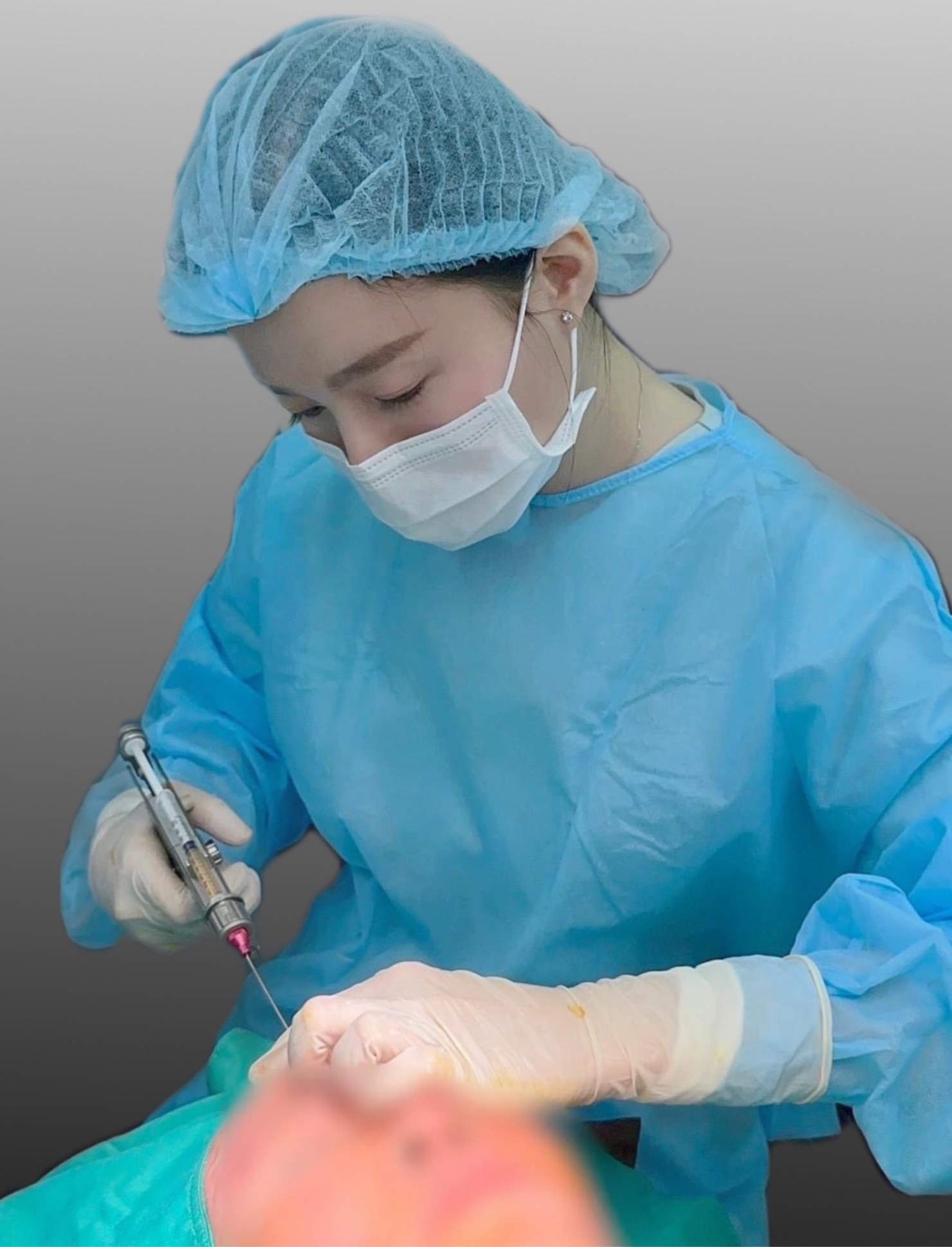
Step 3
The doctor injects and checks before adding more
Small doses are injected layer by layer with a fine needle or a blunt-tip cannula. After each area, the doctor shows you the result in a mirror and massages gently so the filler spreads evenly, before deciding whether to add more.
What happens at a filler appointment
Consultation
Medical history, facial assessment, choice of filler.
Cleansing and numbing
The area is cleansed and numbed.
Doctor injects
Fine needle or cannula, small doses layer by layer.
Mirror check, aftercare
Fine adjustments, review appointment.
What affects the cost of fillers
Dermal fillers from price to be confirmed
The doctor gives you a quote after the first consultation.
Areas treated
One area or several.
Filler type
HA, CaHA or PLLA, and which brand.
Amount of filler
Depends on how much filling is needed.
Follow-up, touch-ups
Monitoring after injection.
What to know about fillers
Read this first so your consultation can go straight to your concerns.
What are fillers?
Fillers (dermal fillers) are gels injected under the skin to replace lost volume, soften lines and folds, or define the lips, chin and cheekbones. The US Food and Drug Administration (FDA) classifies fillers as implanted medical devices, so they must be injected by a doctor in a medical facility.
The most widely used type is hyaluronic acid (HA), a substance naturally present in the skin that holds water and adds plumpness. HA fillers give shape straight after injection and are gradually absorbed by the body, so top-ups are needed. CaHA (calcium hydroxylapatite, such as Radiesse) and PLLA (poly-L-lactic acid) are denser or stimulate the skin to make its own collagen, and suit the chin and jawline.
You should postpone injections if the area is inflamed or has breakouts, if you have a bleeding disorder, have had a severe allergy or are allergic to lidocaine, are pregnant or breastfeeding, or are prone to keloids.
How long do fillers last?
| Filler type | Results visible | Usually lasts | Often used for |
|---|---|---|---|
| Hyaluronic acid (HA) | Straight after injection | 4 to 12 months | Lips, nasolabial folds, cheeks, under-eye hollows, temples |
| CaHA (Radiesse) | Straight after injection | 6 months to 1 year | Chin, jawline, cheekbones |
| PLLA | After 2 to 3 weeks, building gradually | 1 to 3 years | Larger hollow areas needing collagen stimulation |
Figures from the American Academy of Dermatology (AAD). Areas that move a lot, such as the lips, usually break down faster. Your doctor will tell you the expected duration for your area and type of filler.
How long does swelling last, and what should I avoid?
The area may be red, swollen, a little tender to the touch and sometimes bruised. According to the AAD, these usually settle within 7 to 14 days, and sooner for many people. Lips usually swell more than other areas in the first few days.
For about the first 3 days, don’t touch or press the area unless your doctor has told you to massage it. Avoid the sun and saunas, and wait until the next day before doing strenuous exercise. If you take blood-thinning medication, ask your doctor first.
Can fillers cause harm later on?
Most side effects are mild and go away on their own. Less commonly, there may be lumps, infection or filler moving away from the injection site, sometimes appearing only weeks later.
The most serious complication is filler entering a blood vessel. The FDA warns that this can cause skin necrosis, reduced vision, blindness or stroke, and may cause permanent damage. The risk is low, but rises markedly when the injector is not trained or the injection is given outside a medical facility.
Yen doctors reduce the risk by knowing the anatomy of each area, using a blunt-tip cannula where there are many blood vessels, injecting slowly in small doses, using only genuine fillers and watching your skin colour throughout. Yen to confirm hyaluronidase is kept on hand and a vascular occlusion protocol is in place
How long do fillers take to dissolve, and can they be removed?
HA fillers break down gradually on their own, usually over 4 to 12 months. If something needs correcting sooner, for example you are not happy with the shape or a lump forms, the doctor can inject the enzyme hyaluronidase to dissolve HA filler. This enzyme cannot dissolve CaHA or PLLA, so for delicate areas such as the lips and under-eye hollows, doctors usually choose HA.
Should I have nose filler?
Blood vessels in the nose connect with those supplying the eye, and the FDA has not approved any filler for injection into the nose. Yen to confirm whether nose filler is offered, and how patients are advised
Whatever the area, only have injections at a medical facility, given by a doctor. Don’t have injections at a spa or at home, don’t buy filler online, and don’t use needle-free injection pens.
Call the clinic straight away if after the injection you notice unusually increasing pain, skin around the area turning white, grey or bluish-purple, or blurred vision. Don’t wait for your follow-up appointment.
Frequently asked questions
Can’t see your question? Message us on Zalo and a doctor will reply.
How long does a filler treatment take?
Usually about 15 to 30 minutes per area. You can go about your normal routine afterwards.
When will I see results?
Results are usually clear after a few days to 1 week, once the area has settled.
Which filler brands does Yen use?
Restylane, Juvederm, Teoxane, Merz Belotero, Radiesse, Profhilo. The doctor chooses the right one for each area.
How long do fillers last?
HA fillers usually last 4 to 12 months, CaHA 6 months to 1 year and PLLA 1 to 3 years. Areas that move a lot, such as the lips, usually break down faster. Your doctor will tell you the expected duration for your area and type of filler.
Do filler injections hurt?
The doctor numbs the area before starting. It usually feels like stinging and tightness during the injection; the area may be a little tender to the touch for a few days afterwards.
How much do fillers cost?
It depends on the area, the type of filler and how much is needed. Dermal fillers at Yen start from price to be confirmed; the doctor gives you an exact quote after assessing your face.
Can fillers cause harm later on?
When injected with the right technique using genuine fillers, most side effects are mild and go away on their own. The most serious risk is vascular occlusion, which is rare but serious, so you need a doctor who understands injection anatomy and a clinic with a plan in place to manage it.
What should I avoid after fillers?
Don’t touch or press the area for about 3 days unless your doctor tells you to massage it, avoid the sun and saunas, and wait until the next day before strenuous exercise.
What if I don't like the shape?
With HA fillers, the doctor can inject the enzyme hyaluronidase to dissolve some or all of the filler, then adjust again once the area has settled.
Who should not have fillers?
People with inflammation or infection in the area, a bleeding disorder or a history of severe allergy, those who are pregnant or breastfeeding, and those prone to keloids. The doctor takes a careful history before injecting.
References2FDA · AAD
- FDADermal Fillers (Soft Tissue Fillers)
- American Academy of Dermatology (AAD)Fillers: FAQs
Treatment plans and techniques: Yen Clinic doctors. Results vary from person to person. The information on this page is for reference only and does not replace a doctor’s diagnosis.