Treating keloids and hypertrophic scars
The aim is a flatter scar that is less likely to come back, so the doctor works on the whole healing process rather than just making the scar smaller.
- Performed by
- Dr Diep Yen Linh, Dr Diep Yen Nhi
- Course of treatment
- 4 stages, combining several methods
- Follow-up
- 18 to 24 months after treatment

Doctors who examine, treat and follow up every case
Yen treats keloids in four stages, then follows up for 18 to 24 months to act early if the scar shows signs of coming back.
- Dr Diep Yen Linh, MSc, Specialist Level I
- MSc in Dermatology, University of Medicine and Pharmacy at Ho Chi Minh City.
- Dr Diep Yen Nhi, MSc, Specialist Level I
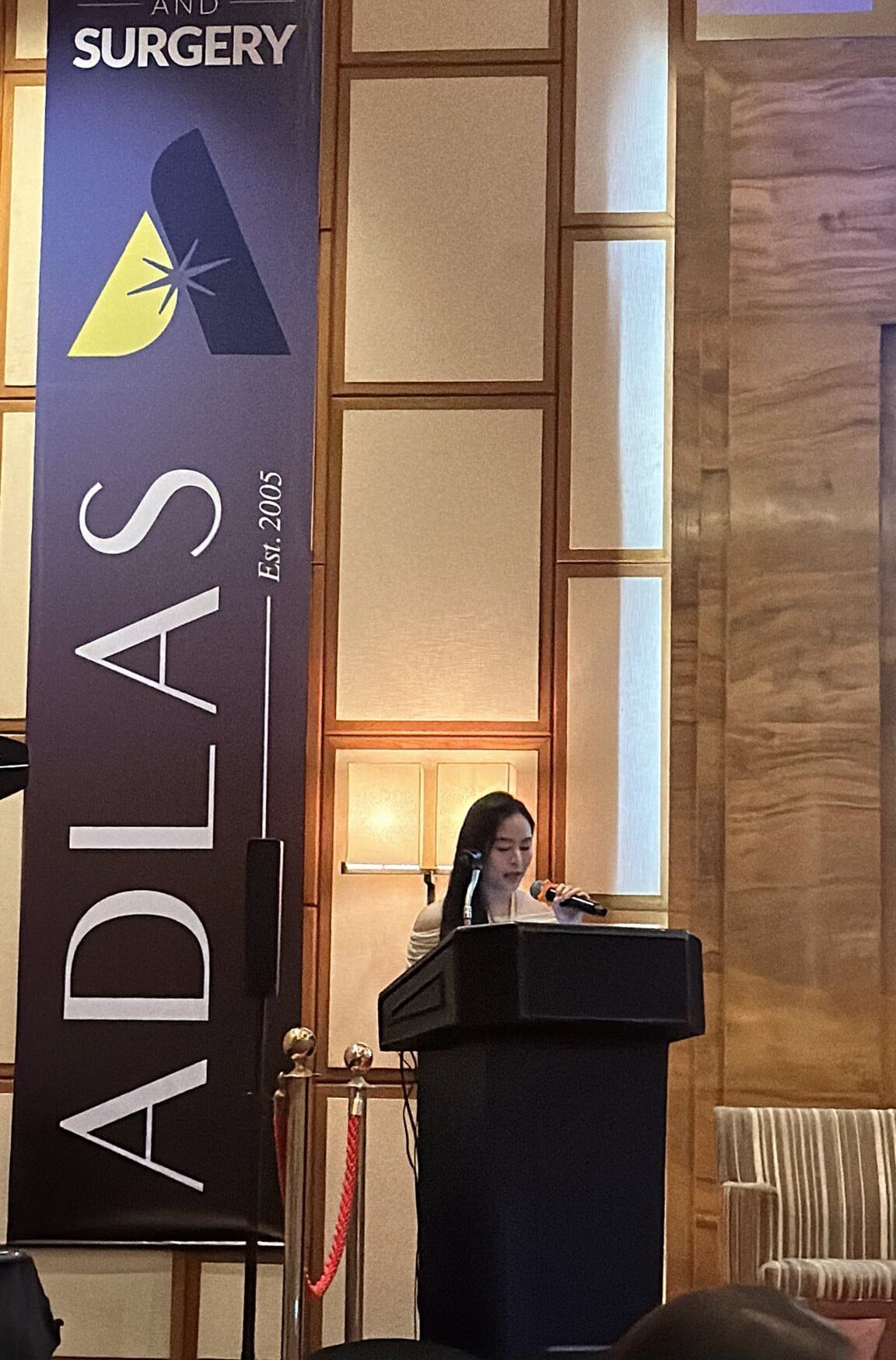
- MSc in Dermatology; Dermatologic Surgery Fellow at Yonsei University, Severance Hospital; International Fellow, ASDS.
- Specialist doctors
- Doctors with a master’s degree or Specialist Level I qualification in dermatology and plastic surgery.
Expected results
Cases Yen has published, shared with the patients’ consent.
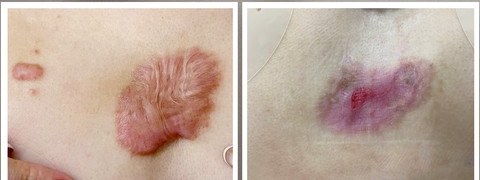
After a combined course of treatment
- The scar gradually softens and flattens, with less redness
- Less itching and pain, better quality of life
- Clearly improved appearance, the scar is less noticeable
- Lower risk of recurrence thanks to the combined treatment plan
-
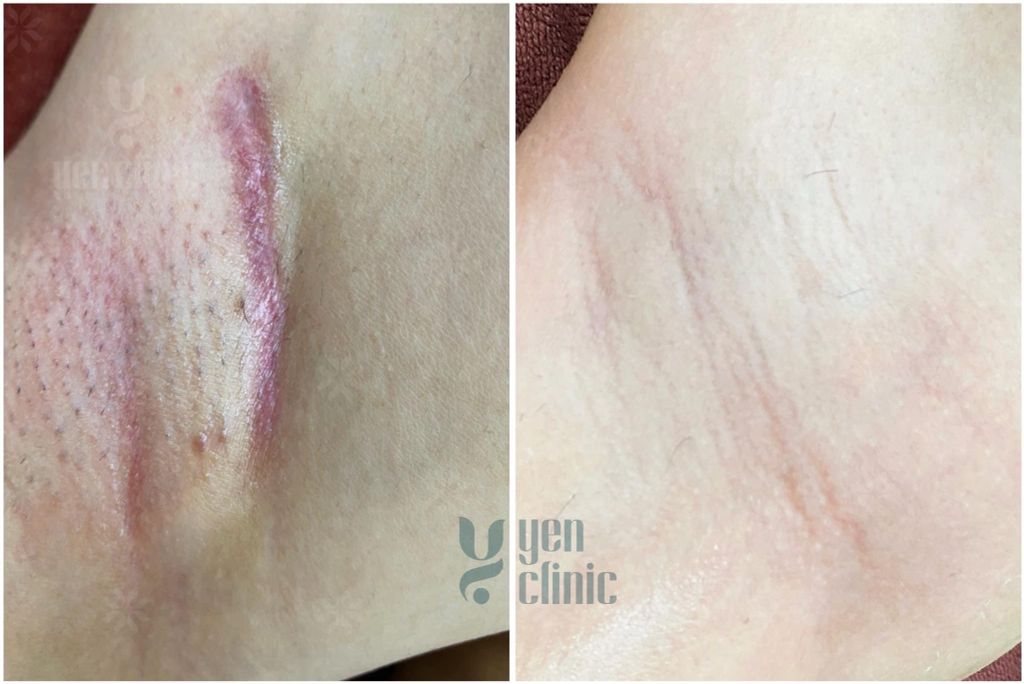
Traumatic and post-surgical scars
After 6 sessions. Read the case
Understanding keloids
Keloids result from abnormal collagen overgrowth, driven by chronic inflammation and disrupted growth signalling.
Chronic inflammation in the deep dermis
Inflammatory cells and cytokines are always present in scar tissue, keeping fibroblasts constantly active.
Your constitution cannot be changed
But the healing environment can: removing chronic inflammation lets the scar flatten, soften and stay stable over the long term.
A single method often fails
That is why Yen combines 4 stages of medical and surgical treatment, then follows up for 18 to 24 months.
Who is prone to keloids
According to DermNet, keloids are more common in people with skin types III–VI, including Asian skin, and can appear months to years after a minor injury: acne, a surgical incision, an insect bite, a piercing or a vaccination.
Common sites
Chest, shoulders, upper back, earlobes, arms and cheekbones: areas where the skin is stretched a lot during movement.
Keloids, hypertrophic scars, surgical scars
-
Keloid
Raised, spreading beyond the edges of the original wound; may itch or hurt.
-
Hypertrophic scar
Raised but within the area of the wound, red and thick.
-
Surgical scar
Thick, puckered surgical scars, or complications after cosmetic procedures elsewhere.
How does a keloid differ from a hypertrophic scar?
| Keloid | Hypertrophic scar | |
|---|---|---|
| Extent | Spreads beyond the original wound | Stays within the wound |
| When it appears | Can be months or years after the injury | Usually within a few weeks |
| Colour, sensation | Red-purple, itchy, painful | Pinkish-red, may itch |
| Course | Rarely flattens on its own, often returns after excision | May improve on its own over time |
Four stages of treatment at Yen
-
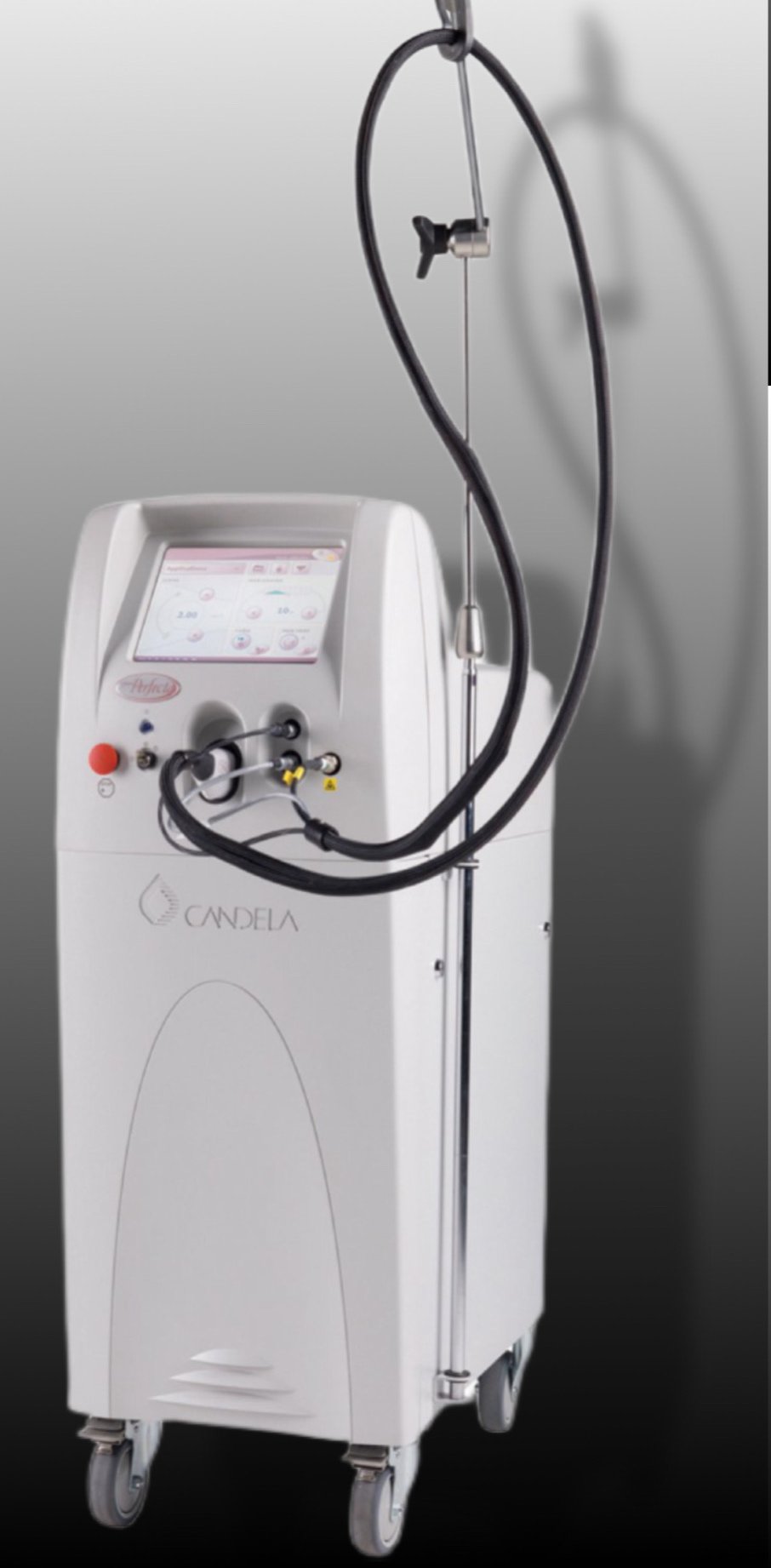
01 · Stage 1
Controlling inflammation and blood vessels
Intralesional injections (corticosteroid, 5-FU), Vbeam laser (PDL), cryotherapy. Reduces redness, itching and burning pain.
-
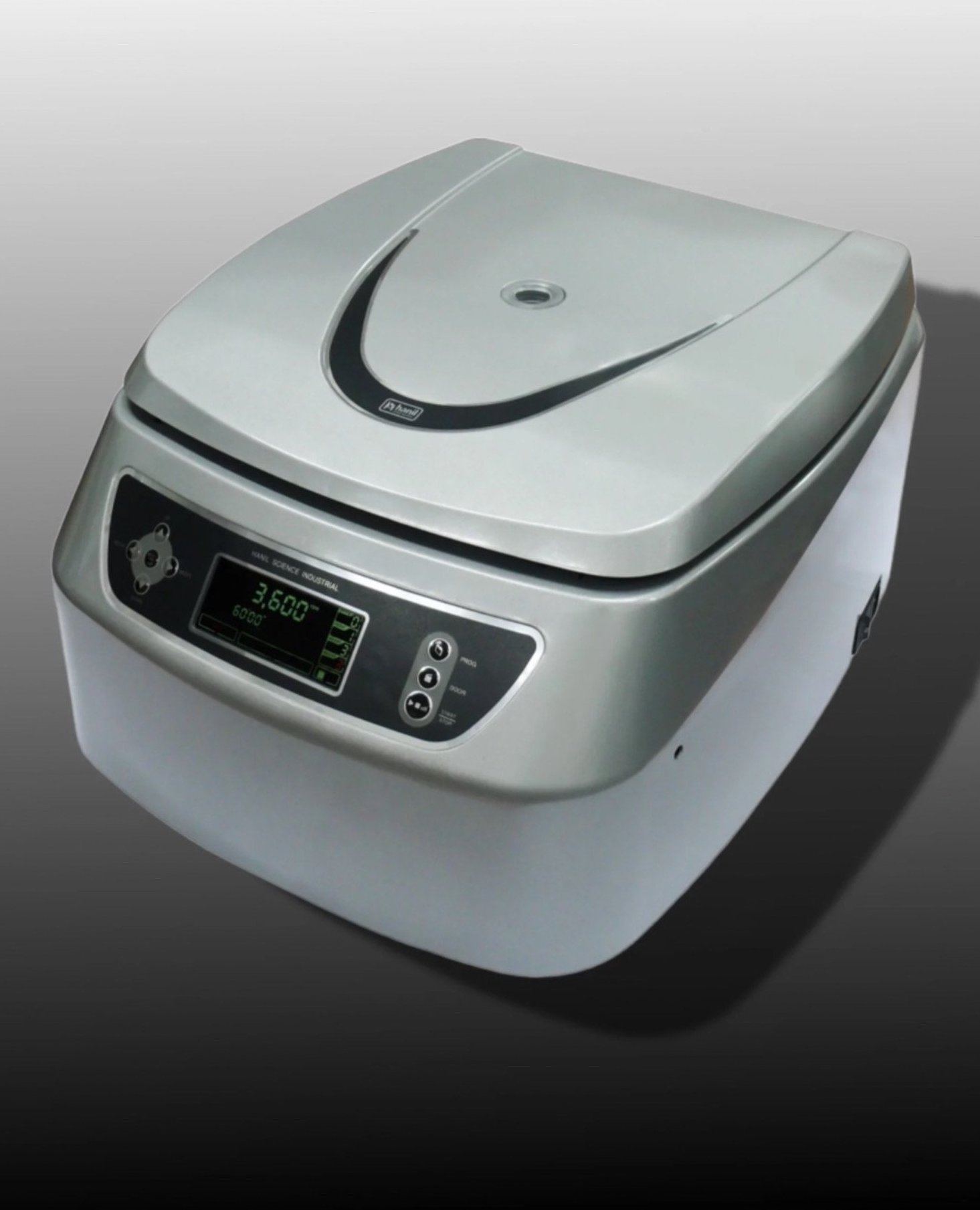
02 · Stage 2
Biological healing
Your own fat, PRF membrane and plasma technology to regulate inflammation, stimulate healthy tissue and soften the scar.
-
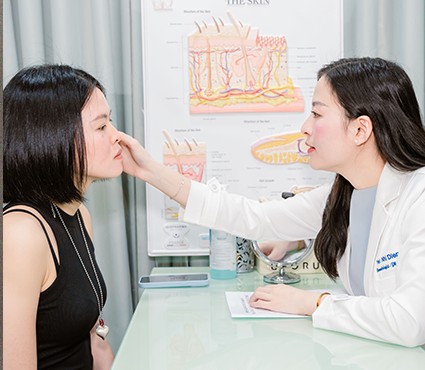
03 · Stage 3
Restoring skin health
Removing causes of inflammation such as acne and injury. Anti-inflammatory peels and retinoids help stabilise the skin.
- Stage 4: Maintenance and preventing recurrence
- Silicone gel or sheets, pressure therapy and care to avoid injury. Follow-up for 18 to 24 months to act early if the scar shows signs of coming back.
Preventing keloids and when to see a doctor
If you are prone to keloids, preventing them from the start is much easier than treating a scar that has already thickened.
Before surgery or piercing
Tell your doctor if you or a family member has had keloids. Avoid unnecessary procedures on the earlobes, chest and shoulders. Incisions should be under as little tension as possible and stitched with the right technique.
While the wound is healing
Keep it clean, avoid scratching and let scabs fall off on their own. Start silicone once the wound has closed, as your doctor advises, and use it for the full 8–12 weeks.
See a doctor early if
The scar keeps getting thicker, spreads beyond the wound, itches or hurts a lot, or an old scar starts to rise again after treatment.
A course of keloid treatment at Yen
Consultation and treatment plan
The doctor assesses the scar and the inflammation and gives you a quote.
Reducing inflammation first
Stabilising the skin so it stops reacting.
Remodelling and regeneration
Laser, injections and scar surgery if needed, then your own fat or PRF.
Long-term follow-up
Follow-up visits over 18 to 24 months.
Keloid treatment costs
Keloid courses from price to be updated
The doctor gives you a quote after the first consultation.
Size and location
One small scar, or a large scar on the chest, shoulder or ear.
Level of inflammation
Scars that are still red and itchy need a longer anti-inflammatory stage.
Combined techniques
Injections, Vbeam laser, your own fat, PRF or scar surgery.
Follow-up period
Number of follow-up visits over 18 to 24 months.
Long-standing keloids and home care
Old scars, scars on the face, the methods in detail and what you can do at home.
What do scar injections, laser and keloid surgery involve?
Intralesional injections: a corticosteroid, sometimes combined with 5-FU, injected directly into the scar tissue and repeated every few weeks. Typical injection interval and number of injections at Yen
Vbeam laser (PDL): targets the blood vessels feeding the scar, reducing redness and itching. Cryotherapy: suitable for thick, widespread scars.
Keloid removal surgery: only one part of the treatment plan. According to DermNet, cutting out a keloid on its own can produce a new, even larger keloid. For large scars that have to be removed, the medical literature recommends combining superficial radiotherapy within 48 hours of surgery to reduce recurrence. Your doctor will advise if your case needs it. Yen to confirm whether radiotherapy is combined and where it is done
What about old keloids or keloids on the face?
Long-standing keloids can still be treated. Older scars are usually harder and thicker, so the injection and laser stage to soften and flatten them lasts longer before surgery is considered.
Keloids on the face (after acne on the cheekbones, chin or jaw) need careful aesthetic judgement: injections and laser come first, and long incisions are avoided. Close follow-up allows early action at any sign of the scar rising again.
What can I do for keloids at home?
Silicone gel or silicone sheets are the best-supported home option. DermNet recommends using them 12–24 hours a day for at least 8–12 weeks, sometimes longer. Silicone helps prevent scars and soften them; for keloids that have already thickened, it is usually not enough on its own.
Remedies such as turmeric, lemon, honey and gotu kola have no evidence of flattening keloids, and lemon can easily irritate the skin. Do not cut, burn or inject a scar yourself: new injury can make a keloid bigger.
Frequently asked questions
Can’t see your question? Message us on Zalo and a doctor will reply.
Can keloids be cured for good?
A tendency to form keloids cannot be changed, but the healing environment can. Once chronic inflammation is removed, the scar flattens, softens and stays stable over the long term. Yen follows up for 18 to 24 months to act early if the scar shows signs of coming back.
Will a keloid come back after it is cut out?
Cutting out a scar on its own often leads to recurrence. At Yen, scar surgery is only one part of the treatment plan, with a stage to reduce inflammation beforehand and aftercare and follow-up afterwards.
Who will actually treat me?
Dr Diep Yen Linh or Dr Diep Yen Nhi examines you, carries out the treatment and does your follow-up. At Yen, procedures are never handed to technicians.
How much does keloid treatment cost?
It depends on the size, location, level of inflammation and the combination of techniques. Keloid courses at Yen start from price to be updated; the doctor gives an exact quote after your consultation.
Does laser work for keloids?
Vbeam laser helps reduce redness and itching and softens the scar, but it is usually combined with intralesional injections and the other stages rather than used on its own.
How long should I use silicone sheets?
Use them 12–24 hours a day for at least 8–12 weeks, sometimes longer. Your doctor will tell you when to start after a procedure.
If I'm prone to keloids, should I get piercings or cosmetic surgery?
Avoid unnecessary procedures, especially on the earlobes, chest and shoulders. If you must have surgery, tell your doctor you are prone to keloids so prevention can be planned from the start.
Are keloids dangerous? Can they turn into cancer?
Keloids and hypertrophic scars are benign and do not turn into skin cancer. Even so, they cause itching and pain and affect your appearance, so they are still worth treating.
Do scar injections hurt, and how often are they given?
Answer awaiting the doctor
How long does it take for a keloid to flatten?
Answer awaiting the doctor
References2DermNet · Yen Clinic
- DermNetKeloid and hypertrophic scar
- Yen ClinicYen Clinic articles
Results vary with each person’s constitution and skin condition. The information on this page is for reference only and does not replace a diagnosis by a doctor.