Treating acne scars and depressed scars
Two specialist doctors treat you themselves, combining subcision, volume filling and laser to suit each scar type.
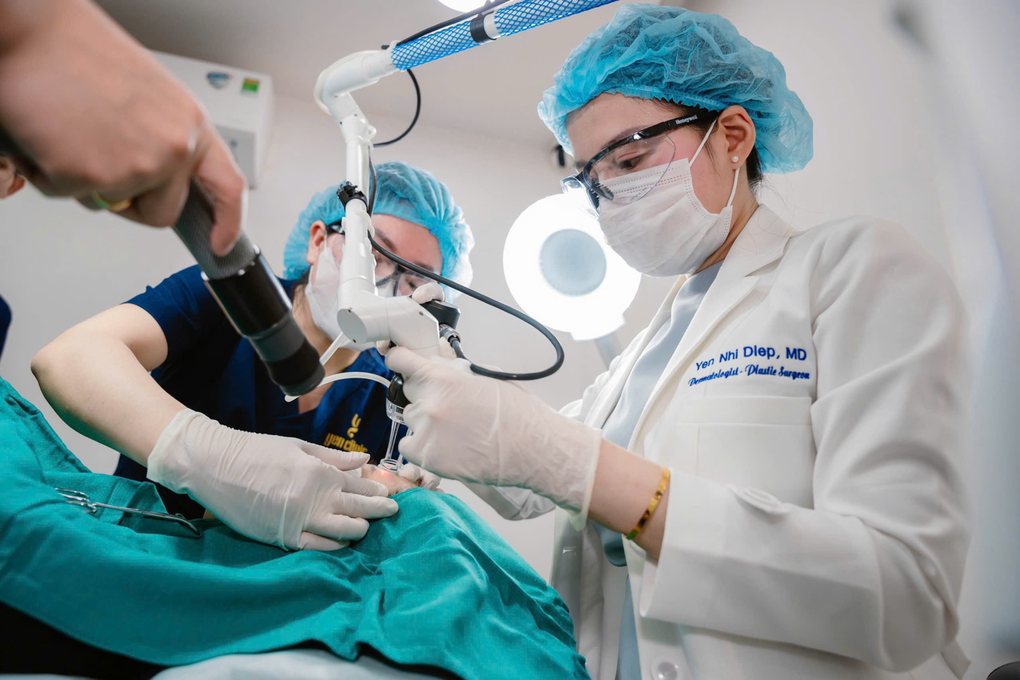
- Performed by
- Dr Diep Yen Linh, Dr Diep Yen Nhi
- Sessions
- 3 to 5 sessions, 4 to 6 weeks apart
- Clinics
- Tan Phu and District 1, Ho Chi Minh City

Doctors who examine, treat and follow up every case
Acne scars damage several layers of skin at once, so Yen’s doctors combine subcision, volume filling and laser in stages.
- Dr Diep Yen Linh, MSc, Specialist Level I
- MSc in Dermatology, University of Medicine and Pharmacy at Ho Chi Minh City.
- Dr Diep Yen Nhi, MSc, Specialist Level I
- MSc in Dermatology; Dermatologic Surgery Fellow at Yonsei University, Severance Hospital; International Fellow, ASDS.
- Specialist doctors
- Doctors with a master’s degree or Specialist Level I qualification in dermatology and plastic surgery.
Before and after treatment
Photos shared with the patients’ consent and published on the clinic’s pages. Results vary from person to person.
-
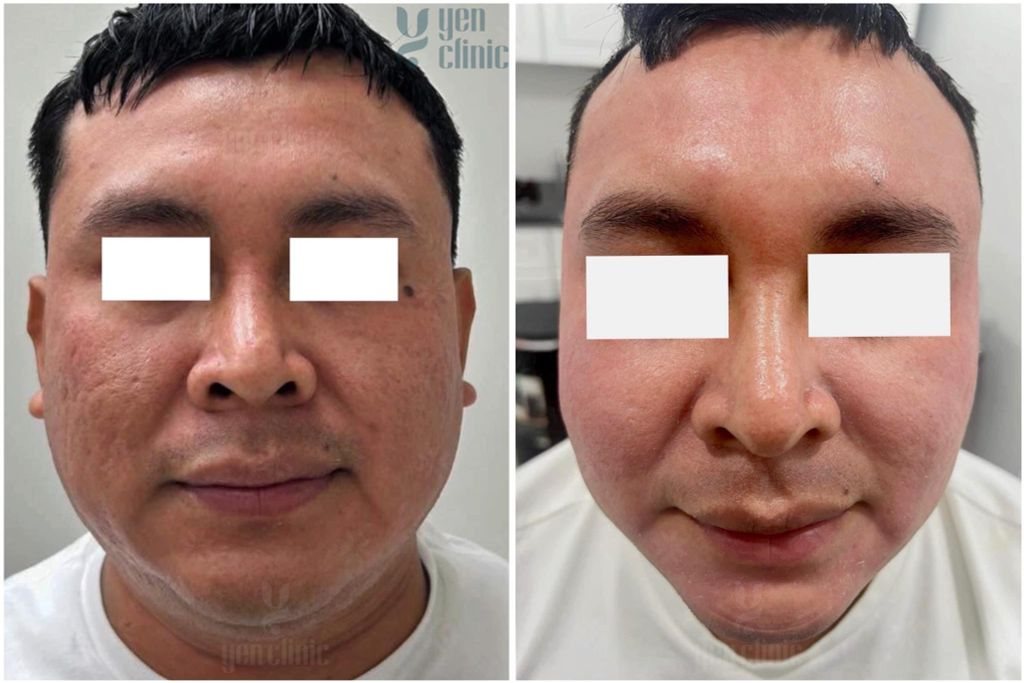
Acne scars in a male patient
Depth controlled at every session. Read the case
-
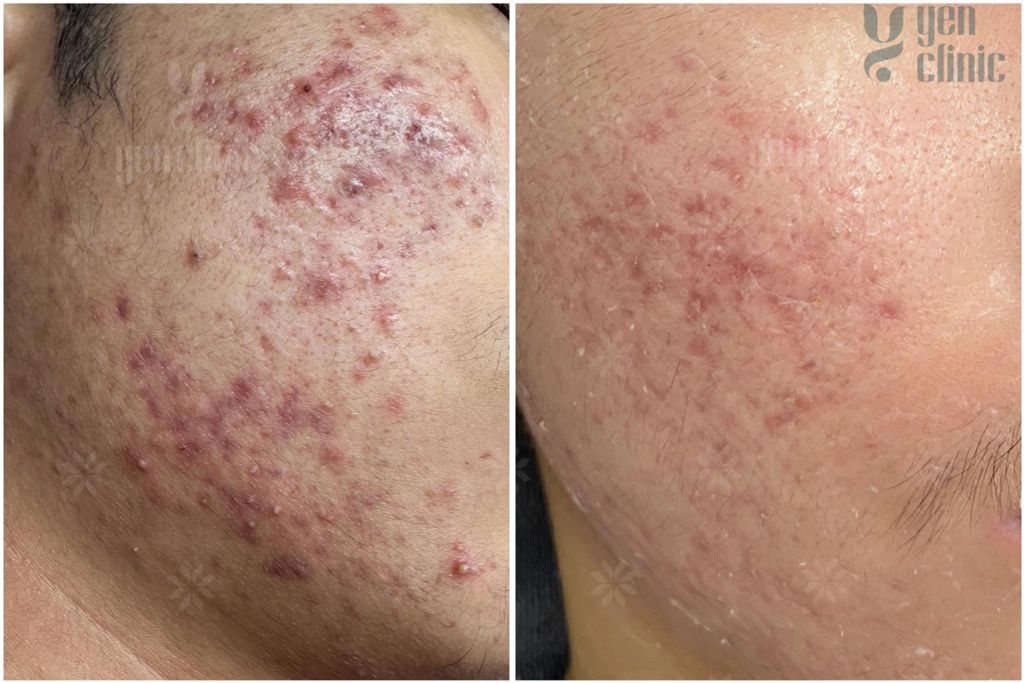
Inflamed acne and acne scars
A course of treatment tracked week by week. Read the case
-
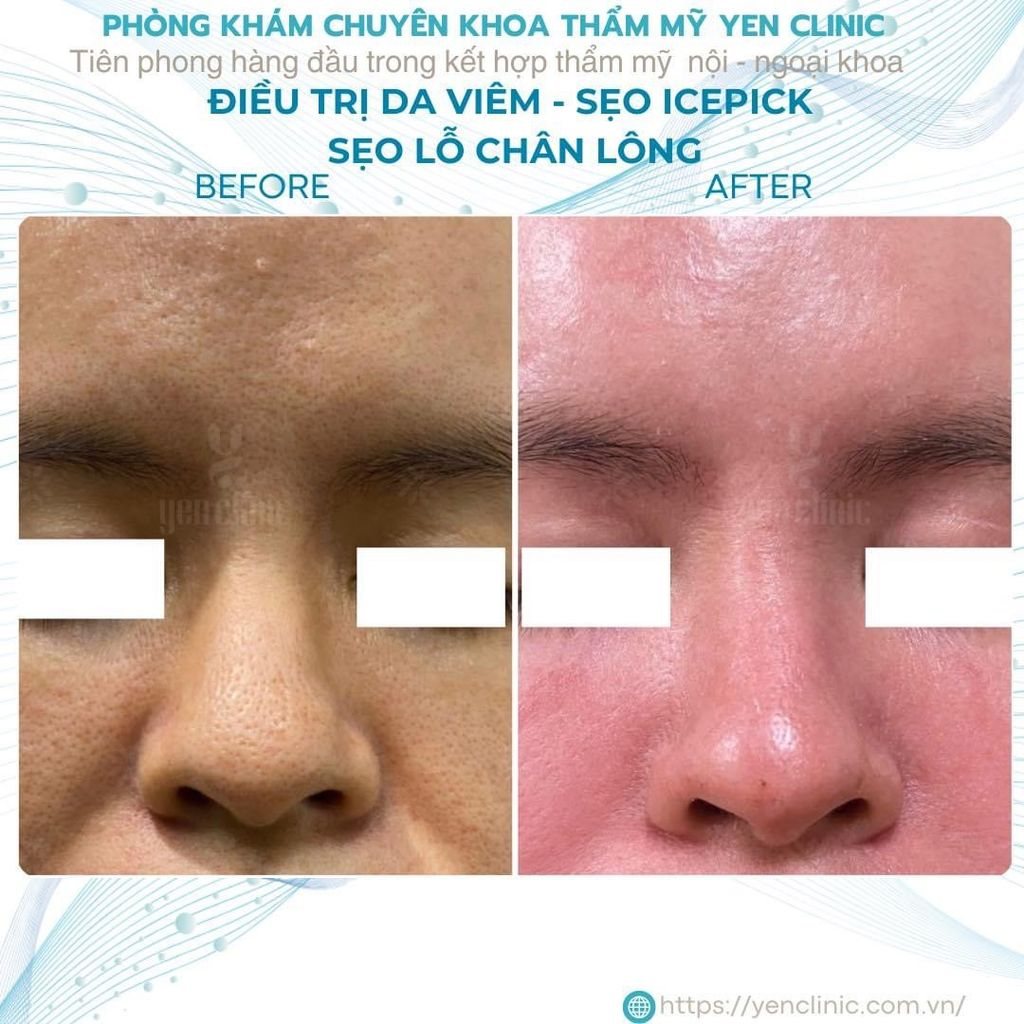
Ice-pick scars and pore-like scars
Preparing the skin before treating the scars. Read the case
What are acne scars and why do they form?
Acne scars (depressed scars left by acne) are indentations in the skin that form when inflamed acne destroys collagen fibres in the dermis. The skin heals but does not make enough new tissue, so the surface sinks. According to DermNet, most acne scars are depressed scars, and ice-pick scars make up about 60–70% of them.
The more inflamed and deeper the acne, the more likely it is to scar. Squeezing or picking spots, treating acne late or without medical advice, and a tendency to scar all raise the risk. Creams cannot fill an indentation; treatment has to reach the damaged layer: the fibrous bands under the scar, the lost volume and the scar edges on the surface.
Three types of acne scar, three approaches
-
Ice-pick
Narrow openings that go deep, like a pinprick.
TCA CROSS, punch excision
-
Boxcar
Steep walls and a flat base, most visible when light casts a shadow.
DEKA CO2 laser, subcision
-
Rolling
A wavy surface, caused by fibrous bands underneath pulling the skin down.
Subcision, filling with your own fat or fillers
Raised scars rather than indented ones? Keloids and hypertrophic scars need a different approach. See keloid treatment
Three layers of a scar, three jobs to do
An acne scar damages the surface, the tissue beneath it and the volume. The doctors combine the methods below for each case.
-
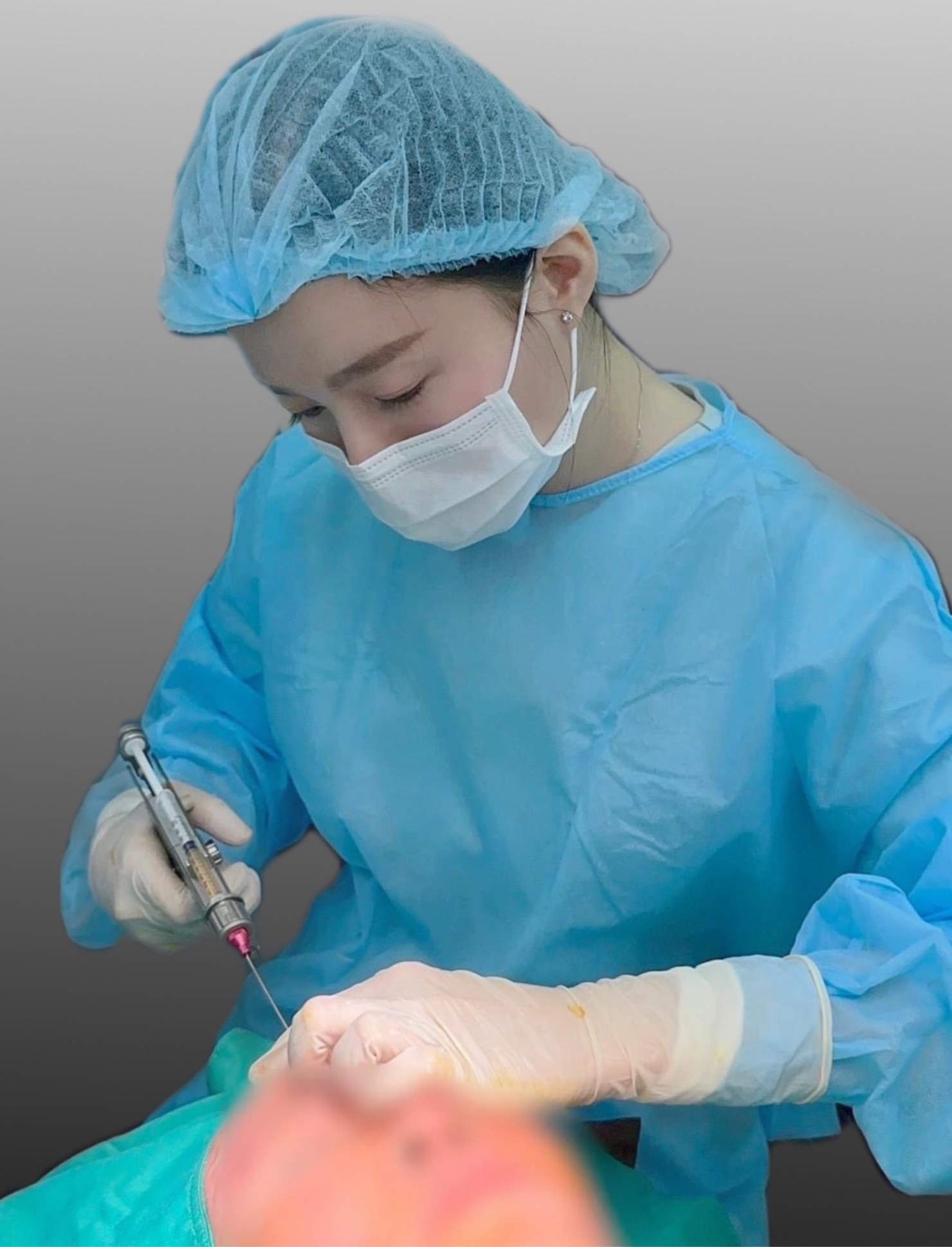
01 · Beneath the skin
Subcision
A needle or cannula is passed under the scar to cut the fibrous bands pulling its base down, so the skin can lift. Best suited to wavy, rolling scars.
-

02 · Surface
DEKA CO2 laser, TCA CROSS
Fractional CO2 laser removes skin in tiny columns, smoothing scar edges and stimulating new collagen. TCA CROSS places high-strength TCA (65–100%) into each ice-pick scar.
-
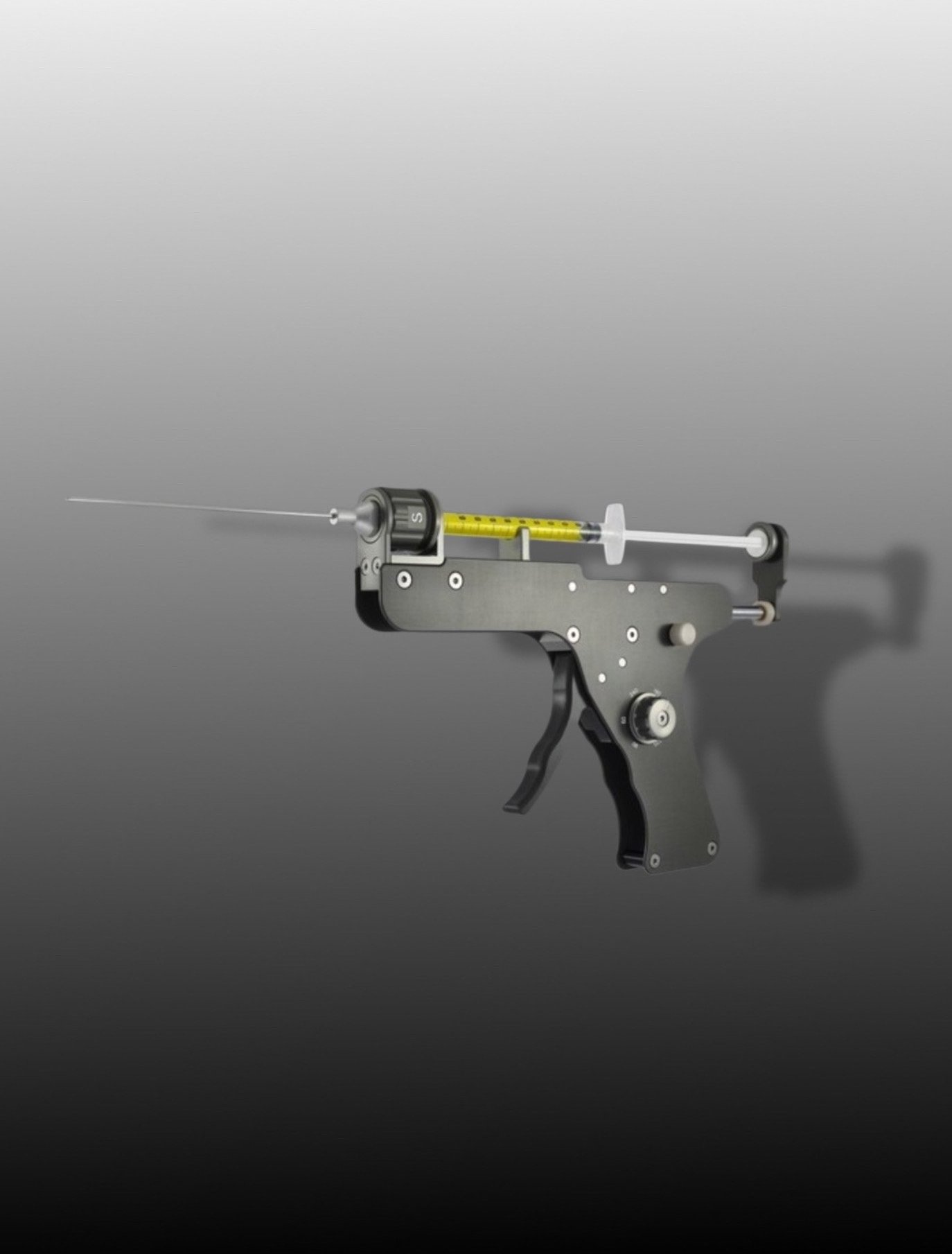
03 · Volume
Your own fat, fillers, PRF
Replaces the tissue lost beneath the scar. Your own fat is often used after subcision to stop the space from sticking back down.
- Punch excision, scar revision surgery
- Removes small, deep scars that the methods above cannot reach. About punch excision
- PRP, recovery care
- Platelet-rich plasma from your own blood, to help the skin recover between sessions. Yen to confirm whether PRP is used in the acne scar treatment plan
- Microneedling, RF microneedling
- Suits shallow scars and enlarged pores; on its own it is usually not enough for deep scars or scars pulled down by fibrous bands. Yen to confirm whether RF microneedling is offered
A course of acne scar treatment at Yen
Consultation and treatment plan
The doctor looks at each scar, explains the approach and gives you a quote.
Preparing the skin
Inflammation and acne are brought under control before any procedure.
Performed by
Sessions are 4 to 6 weeks apart so the skin can recover.
Finishing
Scar excision and stitching, or fat grafting, once the scars have responded to laser and the skin is free of inflammation.
Acne scar treatment costs
Courses from price to be updated
The doctor gives an exact quote after the first consultation.
Scar type and depth
Ice-pick, boxcar and rolling scars each need a different approach.
Area
A few scattered scars on one cheek are different from dense scarring on both.
Sessions
Usually 3 to 5 sessions; each one may combine subcision, laser, fat or PRF.
What to know before treating acne scars
Scar severity, how the methods compare, recovery, long-standing scars and home creams.
Are my acne scars mild, moderate or severe?
| Severity | What you see | Usually needs |
|---|---|---|
| Mild | A few shallow marks, visible in angled light, easy to cover with make-up | Laser or peels to smooth the surface, few sessions |
| Moderate | Many marks on both cheeks, visible at conversation distance | A combination of subcision, CO2 laser and TCA CROSS |
| Severe | Deep, dense scars of mixed types, hard to cover with make-up | A multi-stage treatment plan: subcision, volume filling, laser, punch excision in the final phase |
How do the acne scar treatments compare?
| Method | Targets | Best for | Limitations |
|---|---|---|---|
| Subcision | Fibrous bands under the scar | Rolling scars, tethered scars | May bruise; the bands can reattach if the space is not filled |
| Fractional CO2 laser | Surface, scar edges | Shallow boxcar scars, uneven texture | Redness and flaking for a few days; risk of dark marks on darker skin |
| TCA CROSS | The inside of each small scar | Ice-pick scars | Needs several sessions; poor technique can leave dark marks |
| Punch excision | Removes the whole scar | Ice-pick scars, deep boxcar scars | Leaves a small stitch line that fades over time |
| Your own fat, fillers | Volume under the skin | Wide depressed scars, hollow cheeks | Fillers break down over time; fat grafting requires fat harvesting |
| Microneedling, RF microneedling | Upper dermis | Shallow scars, enlarged pores | Little effect on deep scars or scars pulled down by fibrous bands |
Why does scar treatment take a whole course?
A scar is the result of abnormal wound healing: the structure and function of the skin tissue have changed. So the aim is not just to fill the indentation but to improve the quality of the tissue in the scarred area.
Before treatment, the doctor identifies the scar type, its depth, how it formed and the current state of your skin. The treatment plan combines several layers of action, from reducing inflammation and stimulating collagen to tissue repair, over a focused period of treatment. Dr Diep Yen Nhi stresses that scar treatment is not a one-off fix; the goal is a scarred area that blends better with the healthy skin and stays stable over the long term.
Recovery and aftercare after each session
Recovery. After CO2 laser the skin is red and flakes for the first few days. Number of days of redness and flaking after DEKA CO2 laser. After subcision there may be bruising and mild swelling.
Risks to know about. Asian skin is prone to dark marks after inflammation following laser and peels. Less common: infection, new scarring. Preparing the skin, choosing suitable settings and correct aftercare help reduce these risks.
Home care. Keep the skin clean, moisturise as instructed and use sun protection carefully every day. Let scabs fall off on their own and do not squeeze spots. Pause strong active skincare products until your doctor says you can use them again.
Can old acne scars be treated?
They can be clearly improved, but expectations should be realistic: the aim is shallower scars, a smoother surface and easier coverage with make-up, not skin that looks as if it was never scarred. Long-standing scars are usually more fibrous, so they often need subcision and volume filling first, before the surface is smoothed.
In one case Yen has shared, the patient had long-standing scars and had been treated at several other places. Changes were visible after the first 4 weeks, and the doctor scheduled scar excision and stitching near the final phase, once the skin was free of inflammation. Read the case.
Can creams or home remedies treat acne scars?
Creams, serums and folk remedies cannot fill an indentation, because the lost tissue lies in the dermis. What helps at home is controlling acne so no new scars form, using a retinoid as prescribed for a smoother surface, and sun protection so the dark marks around scars fade faster. To actually fill the scars, you need an in-clinic procedure.
I still have acne. How do I avoid more scars? Treat inflamed acne early with a dermatologist. Do not squeeze or pick spots, or put leaves or powders on inflamed acne.
Frequently asked questions
Can’t see your question? Message us on Zalo and a doctor will reply.
How long does acne scar treatment take?
Usually 3 to 5 sessions, 4 to 6 weeks apart. The exact number depends on the scar type and depth; the doctor will tell you after the first consultation.
Who will actually treat me?
Dr Diep Yen Linh or Dr Diep Yen Nhi examines you, carries out the treatment and does your follow-up. At Yen, procedures are never handed to technicians.
How much does acne scar treatment cost?
It depends on the scar type, the area, the combination of techniques and the number of sessions. Acne scar courses at Yen start from price to be updated; the doctor gives an exact quote after your consultation.
Does acne scar treatment hurt?
The area is numbed with a topical anaesthetic cream or a local anaesthetic injection beforehand. Most people feel prickling and mild burning during treatment and for a few hours afterwards.
Can I have scar treatment while I still have acne?
Your acne should be brought under control first. Treating inflamed skin can lead to poor healing and dark marks; the doctor will treat your acne alongside or before the scar treatment.
Can sensitive or darker skin be treated for acne scars?
Yes, but laser settings and peel strengths need to be chosen with care, and the skin needs more thorough preparation to limit dark marks after inflammation.
How long do acne scar results last?
Scars that have been filled and smoothed usually stay that way for the long term. Your skin will still age naturally, and new acne that is not kept under control can still leave new scars.
Will I need time off work?
Answer awaiting the doctor
What aftercare do I need, and what should I avoid?
Do not pick off scabs, use sun protection carefully, keep your skin clean and moisturised as instructed, and pause strong active skincare products. Your doctor will give detailed instructions for each technique.
References2DermNet · Ngoi Sao
- DermNetAcne scarring
- Ngoi SaoTreating scars by restoring skin health
Cases and treatment plans: Yen Clinic doctors. Results vary with each person’s constitution and skin condition. The information on this page is for reference only and does not replace a diagnosis by a doctor.